The journey from Mwinilunga to Jimbe could fall from four hours to just 72 minutes. For farmers, traders and families, that would be a substantial gain. But the people living beside the road need more than a shorter journey. They need to cross it safely.
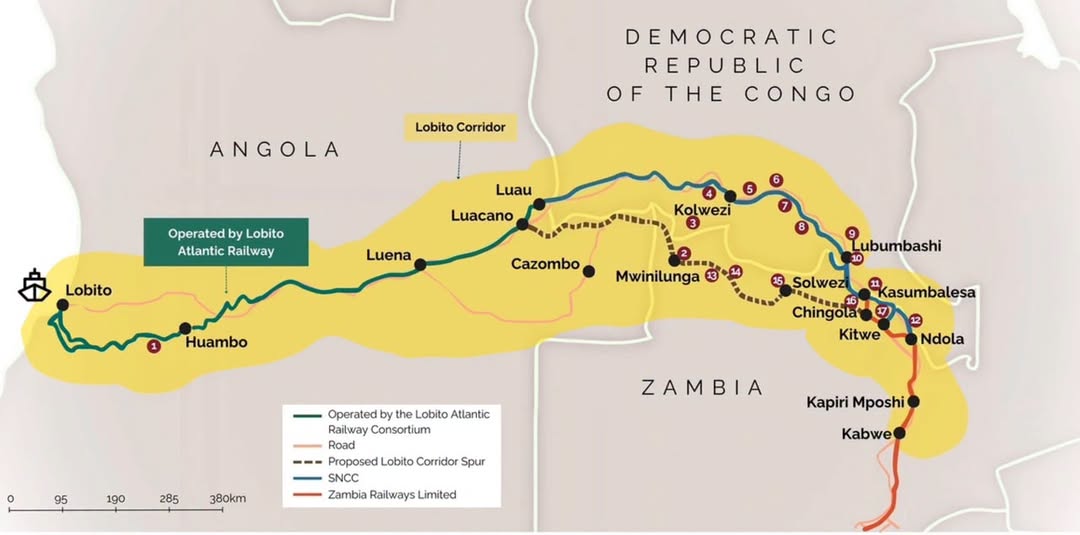
The African Development Bank’s May 2026 appraisal sets out ambitious targets: approximately 550 km of railway in Zambia, a 105 km Mwinilunga–Jimbe road link and a one-stop border post. It projects all-weather transport access reaching 5.1 million people, up from 3.1 million, and annual Zambia–Angola trade increasing from US$4.7 million to US$20 million.
These are expected outcomes, still dependent on finance, delivery and other investments. ZRST supports the corridor’s economic purpose. Our concern is whether safety commitments will become funded works before roads and trains begin operating.
Faster journeys need safer villages
Zambia Police’s annual figures, reported by Zambia Monitor, put road deaths at 2,567 in 2025, compared with 2,199 in 2024. Pedestrians accounted for 934 deaths. These are national figures, not a forecast for the Lobito Corridor, but they show why people on foot must be central to its design.
The proposed Jimbe journey time implies an average of roughly 88 km/h across 105 km. That is not a measured speed or a proposed speed limit through villages. It does, however, raise a design question: how will the road deliver faster journeys while keeping speeds safe where people live, trade and walk to school?
The answer must appear in drawings and contracts: continuous walking routes, crossings where people actually cross, speed control through settlements and protection around schools and markets. Public awareness cannot make up for a road that leaves pedestrians exposed.
The railway’s commitments need a clear delivery trail
The November 2025 Zambia railway environmental and social impact assessment recognises community danger from train operations. It also promises fencing, safe crossings based on existing travel patterns, and alternatives where the railway changes community paths.
Those commitments deserve support. Yet the operational health and safety table lists worker-focused measures, leaving an unclear link between the community risk and the actions intended to reduce it.
The budget lists US$49,500 annually for the Traffic Management Plan. That figure should not be presented as the railway’s entire safety budget. Equally, the management-plan budget does not clearly identify the capital cost of pedestrian crossings and corridor fencing.
We should ask the project team to show where those works sit in the engineering scope, who will pay for them and who will maintain them. A missing budget line does not prove a crossing will be omitted. It does mean the link between promise, design and funding needs to be made clear.
Women need safe journeys, not simply better access
The appraisal targets women as at least half of the people with improved transport access. Whether that access is useful will depend on conditions at bus stops, markets, stations and the border.
ZRST has relevant experience. In a September 2026 reference letter, EMPOWER coordinator Paul Curtis of SLR Consulting confirms that ZRST established a passenger reporting mechanism in Lusaka, promoted its use and delivered training on sexual and gender-based violence in public transport under the UK-funded EMPOWER work.
That is a credible starting point for corridor work. It is not proof that an urban reporting system will work unchanged in rural North-Western Province.
The AfDB appraisal acknowledges risks from labour influx. It proposes a gender specialist, training and a GBV prevention and response mechanism. The fair challenge is whether these commitments will have enough staff, money and local reach.
Women should help decide where waiting areas belong, how complaints can be made safely and which services can respond. Lighting matters, but so do reliable transport, confidentiality and help that does not depend on owning a smartphone.
The report’s 30% target for women among 500 direct and indirect jobs also deserves scrutiny. A stated shortage of skills should lead to funded training and credible hiring routes. Driving may offer one route, alongside rail, maintenance and other trades. A driving licence alone will not secure a job.
Count the journeys that large projects disrupt
RDA’s economic analysis, reproduced in the appraisal, estimates an 18.8% economic return for the road, falling to 14.1% when traffic is 20% lower and costs 20% higher.
Those figures support the investment case. They do not settle whether every local journey will be safe.
The appraisal also anticipates substantial displacement and loss of land or livelihoods. Moving a household can change its route to a school, field, clinic or water point. Those replacement journeys need to be mapped with affected residents before relocation.
A crossing that requires a long detour may look adequate on a plan and fail in daily use. People will seek the shortest route, particularly when carrying goods or accompanying children.
ZRST’s proposed contribution
ZRST has proposed a pilot on the 68 km Kanongesha–Mwinilunga railway segment. It is an offer for discussion, not an awarded assignment.
We would begin with five practical tasks:
- Walk and map existing routes. Record footpaths, school journeys, market routes and livestock crossings, then support qualified road and rail specialists in assessing risk.
- Establish a baseline. Seek three years of police and RTSA crash records, add speed and traffic surveys, and pursue hospital injury data subject to permissions, ethics requirements and privacy safeguards.
- Prepare schools and communities. Tie engagement to crossing designs and the construction schedule, drawing on ZRST’s Safer Journeys to School work.
- Test safer travel arrangements for women. Adapt reporting and referral methods with women, operators and local support services, building on EMPOWER experience.
- Support contractor and fleet controls. Help define work-zone practices, speed management, driver oversight and incident reporting with the responsible authorities and firms.
Our corridor experience to date includes work with Amend on the Serenje–Mpika section of the Great North Road. North-Western Province is newer ground.
We would start with the 68 km segment because we do not yet know which local paths a desk map has missed.
ZRST should contribute within its competence, alongside rail engineers, safeguarding specialists and local institutions. If an existing contractor already has a crossing survey in its scope, our role should strengthen that work.
Make safety a condition of opening
The Ministry of Infrastructure, Housing and Urban Development, RDA, transport authorities, AFC and project financiers need a shared, verifiable safety plan. Related corridor programmes should coordinate with it while retaining clear responsibilities.
Before opening, each high-risk location should have an agreed treatment, a responsible party, funding and a completed check. Unresolved serious risks should affect the decision to open.
We would rather ZRST lose a seat at the launch than stay quiet about a dangerous school crossing.
The Lobito Corridor can bring real gains to Zambia. Its success should be judged both by freight reaching the port and by whether a child, trader or farmer can safely reach the other side.
Source documents
- AfDB Project Appraisal Report, May 2026, particularly paragraphs 19, 23, 42–45 and 53–55, and the economic analysis.
- Zambia Lobito Railway ESIA, November 2025, operational health and safety measures and chapter 17 budget.