
We measure what changed, not only what was delivered.
The Zambia Road Safety Trust uses a practical Monitoring, Evaluation and Learning framework to test whether road-safety and sustainable-mobility projects reduce risk, strengthen local systems and remain useful after funding ends.
Discuss an evaluationBaseline firstMeasure before major work begins
Claims matched to proofNo impact language without impact evidence
Follow-up built inCheck whether results and systems last
Counting activity is not the same as proving safer roads.
Workshops held, materials issued and people reached are useful delivery records. They do not prove that speed fell, behaviour changed, a policy was used or serious injury risk declined.
ZRST separates activities, outputs, outcomes, impact and long-term sustainability. Every public claim must be traceable to a defined indicator, a verification source and a stated level of confidence.
The ZRST LASTS Framework
A proportionate process for small projects, major programmes and independent client assignments.
Locate the risk
Define who is exposed, where the danger occurs and which system failures can lead to death or serious injury.
Agree the causal case
Set out how the work is expected to create change, the assumptions involved and the claims the evidence must support.
Set the evidence plan
Agree the baseline, indicators, comparison approach, tools, responsibilities and safeguards before delivery begins.
Track and test
Collect consistent data, check its quality, test progress and change course when evidence shows that an approach is weak.
Sustain and share
Check whether assets, budgets, skills and management controls remain in use after funding ends.
Four different claims. Four different proof thresholds.
Strong language is reserved for strong designs. When a comparison is not credible, we report observed change or plausible contribution, not causal impact.
Delivery
What was completed, where, when and to what standard.
Observed change
What changed from the baseline using the same measurement method.
Contribution
Whether the evidence supports a credible ZRST role after other influences are tested.
Impact
A causal effect claimed only when the design provides a credible comparison or counterfactual.
Evidence that sits closer to real safety.
Indicator sets are selected for the project, its scale and the decision the evidence must support.
- 01Vehicle speeds and compliance
- 02Pedestrian and cyclist movement
- 03Crossing, yielding and helmet use
- 04Training skill and workplace practice
- 05Fleet risk controls and incident rates
- 06Infrastructure quality and maintenance
- 07Policy approval, funding and use
- 08Safe access to low-carbon transport
Monitoring and evaluation services
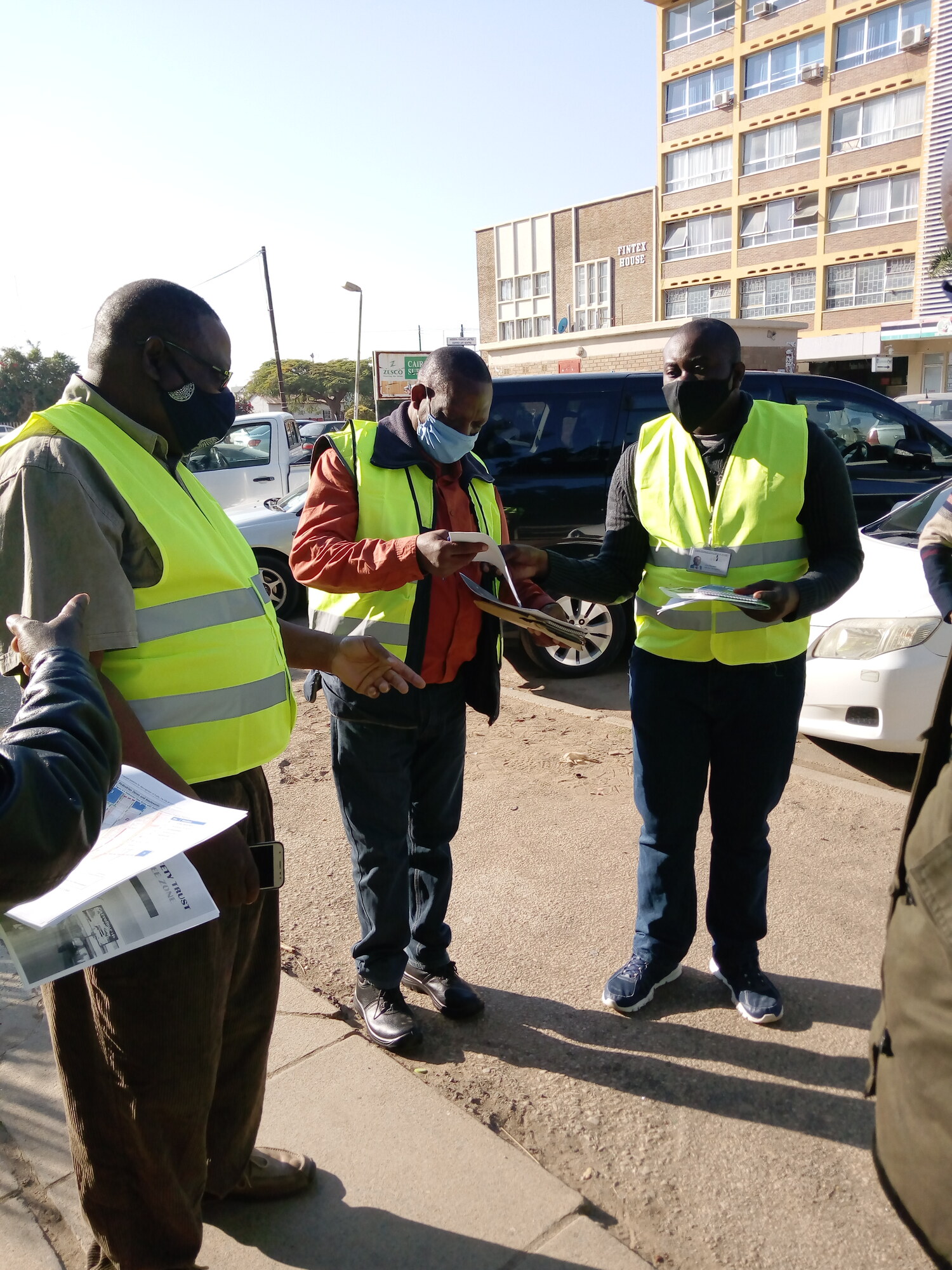
ZRST can design the evidence system, evaluate a programme or test whether the benefits remained after project close.
 ller projects
Project monitoring
A results chain, indicator plan, tools, dashboard, field verification and close-out review.
Outcome evaluation
Baseline and endline measurement, mixed methods, comparison sites where feasible and a management response.
Impact and sustainability
Independent design, causal analysis where feasible, technical review and follow-up at 6, 12 and 24 months.
We will not convert attendance into impact, impressions into people or short-term change into lives saved.
That restraint protects the funder, the public and ZRST. Where evidence is limited, we say so and recommend the next credible step.
Planning a road-safety or sustainable-mobility project?
Speak with ZRST before delivery begins. A sound baseline and a realistic claim are harder to recover after the work is complete.
info@zambianroadsafety.org