ZRST success story
Success Story: Lusaka’s Vision Zero for Youth International Leadership Award
How school-route safety advocacy in Lusaka helped inspire national action on child road safety.
In May 2023, Lusaka received the Vision Zero for Youth International Leadership Award, recognising the city’s child road safety leadership and the wider partnership that helped improve school-route safety and support national low-speed policy.
ZRST’s role in this success story was advocacy, convening, evidence-building, public communication and sustained follow-through on child road safety. The award was given to Lusaka, and the progress it recognised was achieved through a wider coalition of city, government, NGO, technical and funding partners.
Why this recognition matters
Local school-route safety can influence national action.
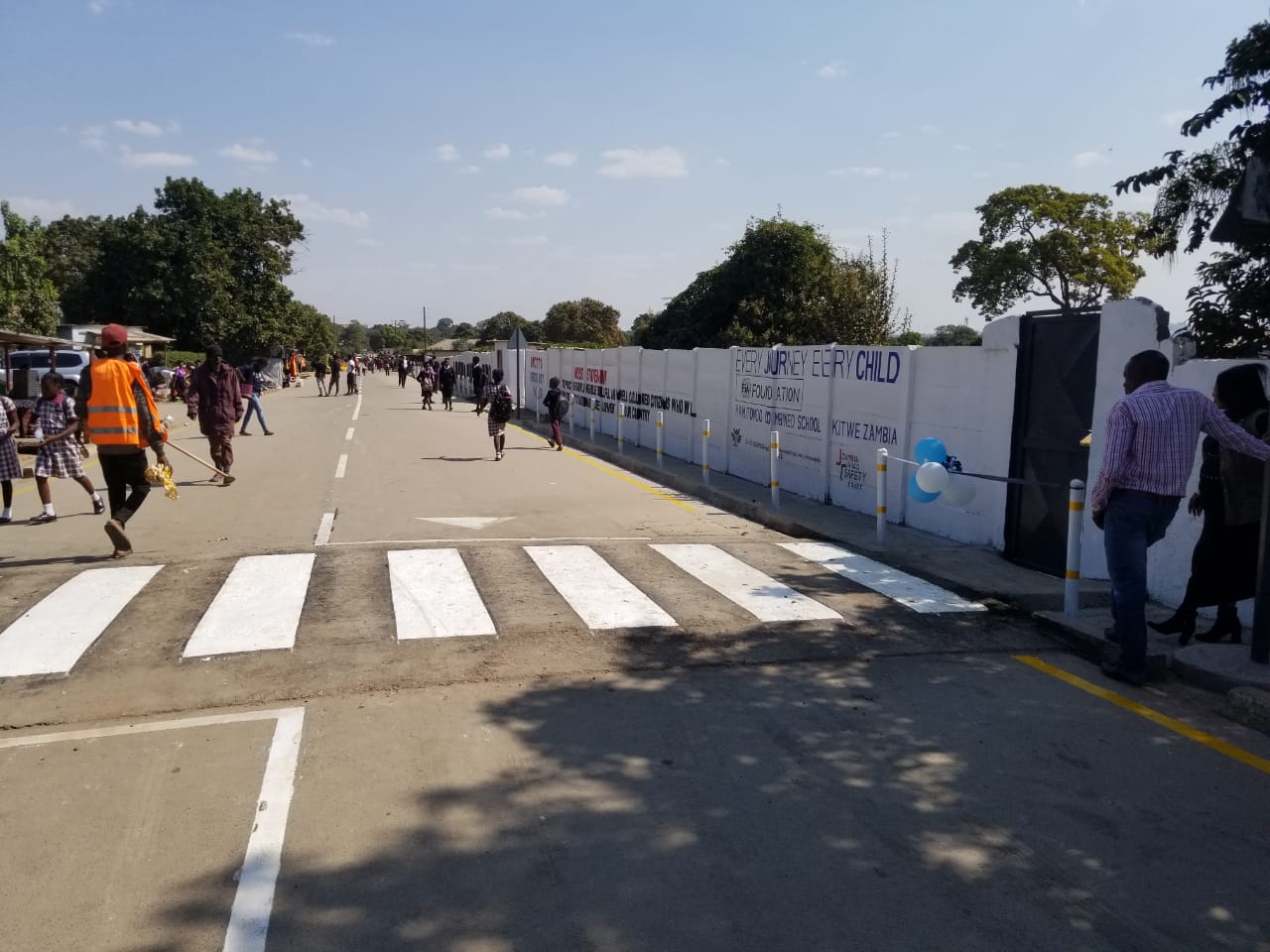
Child pedestrians are among the most vulnerable road users. Safer routes to school require infrastructure, speed management, enforcement, education, community engagement and sustained advocacy. Lusaka’s recognition showed that practical local action can help build the case for broader child road safety reform.
Children need safer environments
Road safety education is important, but children also need streets, crossings and school-zone speeds that reduce exposure to serious harm.
Infrastructure and speed matter
Safer school routes depend on practical measures such as crossings, traffic calming, signage and low-speed environments around schools.
Advocacy sustains reform
Policy change requires public institutions, technical partners, schools and civil society to keep child safety visible beyond one project launch.
The award
International recognition for Lusaka’s child road safety leadership.
The Vision Zero for Youth International Leadership Award was announced in May 2023 during UN Global Road Safety Week. It is presented by the Vision Zero for Youth initiative, led by the U.S. National Center for Safe Routes to School with support from the FIA Foundation.
Lusaka joined internationally recognised cities such as Bogotá, Addis Ababa, Fortaleza and Pleiku City / Gia Lai Province. The award recognised leadership in protecting children and reducing traffic deaths among young road users.
Award recipient
Lusaka, Zambia, was recognised as the 2023 international recipient.
Recognition focus
The award recognised low-speed streets, school-route safety and infrastructure improvements around schools.
Institutional relevance
The award demonstrated how local school-route safety work can support national road safety policy and implementation.
The road safety problem
The work responded to serious risk faced by children walking to school.
According to the public award case study, pedestrians represented a major share of road deaths in Zambia, many school-age children walked to school, and schools such as Northmead Primary had documented road safety concerns. Unsafe speeds and inadequate school-zone protection created daily risk for learners.
ZRST’s role
ZRST’s role in the success story.
ZRST’s contribution was significant because it helped keep child road safety visible, connected the issue to public institutions, supported evidence-led advocacy and continued to promote low-speed, safer school environments.
Advocacy
ZRST helped keep child road safety, school-route risk and low-speed streets on the public and policy agenda through public communication and stakeholder engagement.
Convening
ZRST brought together public institutions, city leaders, schools, technical partners and road safety organisations through meetings, roundtables and engagement.
Evidence-building
ZRST contributed data, public communication and local road safety knowledge, including evidence on children walking to school and the need for safer environments.
Policy follow-through
ZRST continued advocating for school-zone speed management, 30 km/h implementation and safer school environments beyond the initial pilots.
Wider partnership delivery
What the wider partnership delivered.
The Lusaka success story included school-route safety assessments, infrastructure improvements, road safety education, iRAP Star Rating for Schools assessments, speed reduction around selected schools, and city and national policy engagement.
The physical infrastructure work at Justin Kabwe, Northmead Primary and Northmead Secondary was delivered through partner-supported programmes involving Amend, FedEx, Partnership for Healthy Cities, Bloomberg Philanthropies, Vital Strategies, iRAP, FIA Foundation and city or government partners. ZRST’s contribution was advocacy, convening, evidence-building and policy follow-through.
School-route safety assessments
- School Area Road Safety Assessments
- iRAP Star Rating for Schools assessments
- Identification of school-zone risk factors
Infrastructure and education
- Raised zebra crossings
- Rumble strips and bollards
- Footpaths and signage
- Road safety education
Policy and implementation momentum
- City leadership and partner coordination
- School-zone speed management
- National low-speed policy advocacy
- Continued child road safety engagement
Timeline of progress
From school-route improvements to international recognition.
The award recognised a multi-year journey involving school-route safety improvements, city leadership, national advocacy and continued policy attention to children walking to school.
SARSAI assessment and safety improvements at Justin Kabwe Primary School, implemented through partner-supported work involving Amend, FedEx, ZRST and city partners.
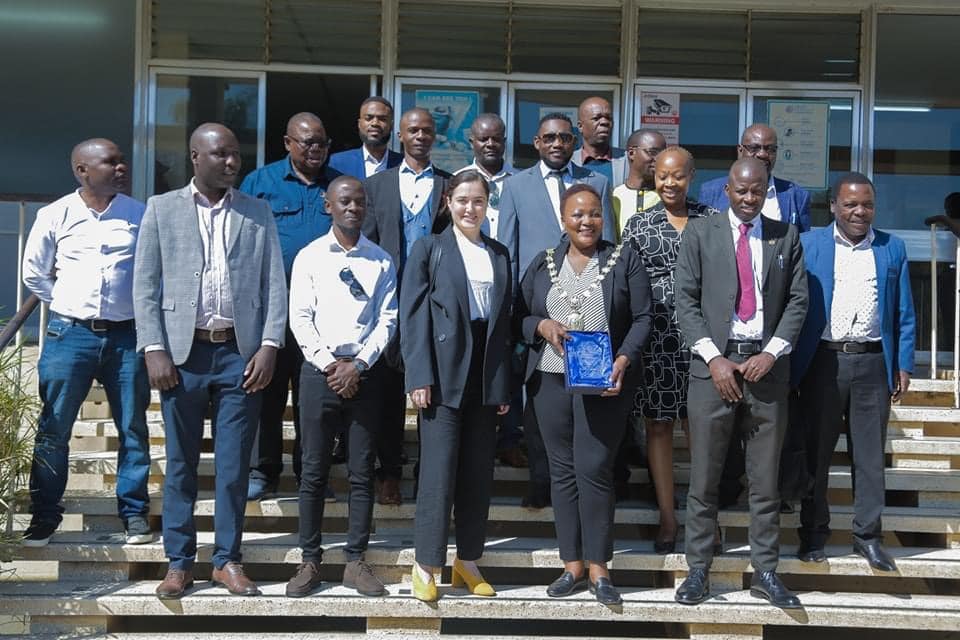
Mayor Wilson Kalumba signed the Child Health Initiative declaration, and ZRST hosted the Safer and Healthier Journeys to School Roundtable with city, NGO, technical and funding partners.
Northmead Primary and Northmead Secondary school-zone improvements were delivered through Partnership for Healthy Cities-supported work with Amend, Bloomberg Philanthropies, Vital Strategies and city partners.
Further school-zone advocacy and national low-speed policy engagement helped move the issue from selected school projects toward wider policy action.
Statutory Instrument No. 7 of 2020 established the national legal basis for 30 km/h school-zone speed limits in Zambia.
Lusaka received the Vision Zero for Youth International Leadership Award, recognising the wider child road safety journey and leadership on low-speed school environments.
Measured and reported results
Reported improvements at selected school zones.
The figures below are drawn from the public award case study and partner reporting. They should be understood as results from selected school-zone interventions, not as ZRST-only results.
iRAP Star Rating improvements
The case study reported that Justin Kabwe Primary School improved from a one-to-two-star iRAP Star Rating for Schools score to five stars after safety improvements. It also reported that Northmead Primary and Northmead Secondary improved from one star to five stars.
Speed reduction near schools
The case study reported that average vehicle speeds at one Northmead school zone fell from 38 km/h to 12 km/h after interventions, while another fell from 22 km/h to 18 km/h.
National low-speed policy progress
The Lusaka case helped support wider policy attention to low-speed school environments and the national 30 km/h school-zone speed-limit framework.
Walking exposure
The public case study reported ZRST data showing that more than 70 percent of school-age children in Zambia walk to school, reinforcing the need for safer school routes.
“Children can’t just be taught road safety – they need a safe environment to and from school.”
Daniel Mwamba, CEO/Director of ZRST, quoted in the public Vision Zero for Youth case studyShared credit
A shared achievement.
Lusaka’s recognition was not the work of one organisation. It reflected a wider coalition of public institutions, technical partners, funders, NGOs, schools and communities.
Future partners
What this success story shows future partners.
The Lusaka award story demonstrates that ZRST can contribute to child road safety progress by identifying problems, building public attention, convening partners, supporting evidence-led advocacy and helping move school-zone safety from isolated projects toward wider implementation.
Problem identification
ZRST helps identify and communicate road safety risks that affect children, pedestrians and school communities.
Institutional convening
ZRST works with public institutions, technical partners, schools, NGOs and funders to move road safety issues into practical action.
Implementation logic
ZRST understands that safe school-zone work needs infrastructure, speed management, enforcement, education, monitoring and sustained funding.
External evidence
These sources are hosted outside ZRST and document the award, the official case study and the public announcement.
| Source | What it confirms | Why it matters | Link |
|---|---|---|---|
| Vision Zero for Youth official case study PDF | Documents Lusaka’s school-route safety journey, partner roles, ZRST’s advocacy and convening role, and reported outcomes. | Provides the main external evidence base for this success story. | Open case study PDF |
| Vision Zero for Youth award page | Confirms Lusaka’s selection as the 2023 international award recipient and summarises the basis for recognition. | Provides the official award page and public validation of Lusaka’s leadership. | Open award page |
| FIA Foundation press release | Announces Lusaka’s receipt of the 2023 Vision Zero for Youth International Leadership Award. | Provides independent partner confirmation from the FIA Foundation. | Open press release |
| Zambia Road Safety Trust | Internal ZRST reporting on safe school zones, road safety data and ongoing child road safety work. | Helps connect the award story to current ZRST implementation and partnership opportunities. | Visit ZRST website |