Zambia Road Safety Trust
More Than 1,330 Vulnerable Road Users Reached as ZRST Takes Night Safety Campaign to Lusaka Streets
Seen in Time: What One Night on Lusaka’s Heroes Stadium Corridor Taught Us About Protecting Pedestrians and Cyclists
With support from a US$1,000 GoFundMe donation, the Zambia Road Safety Trust took a practical road safety response directly to people travelling and working alongside traffic after dark. More than 1,330 vulnerable road users were reached in one evening.
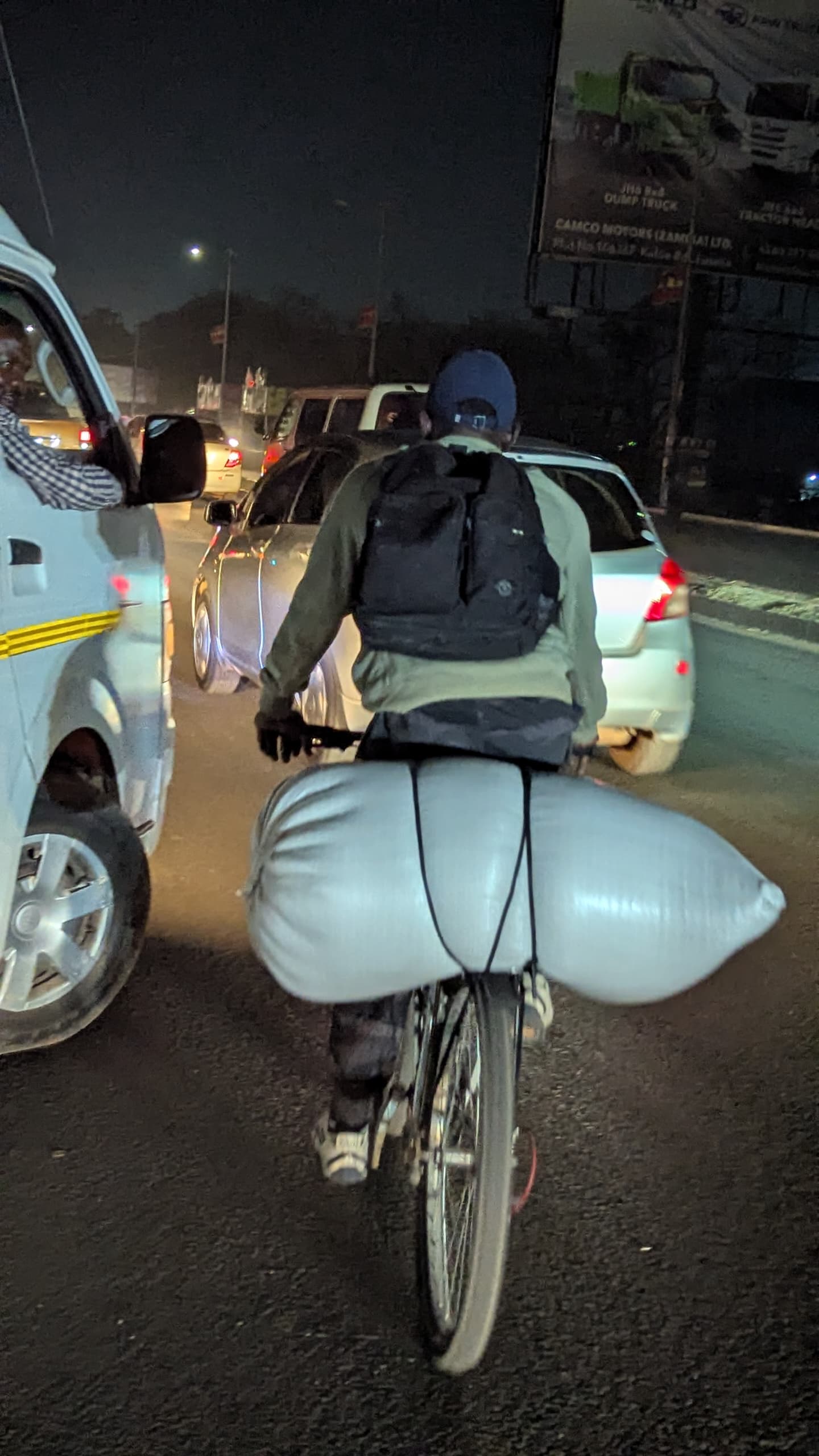
At seven o’clock on Friday evening, 7 August 2026, darkness had settled around the Heroes Stadium corridor in Lusaka.
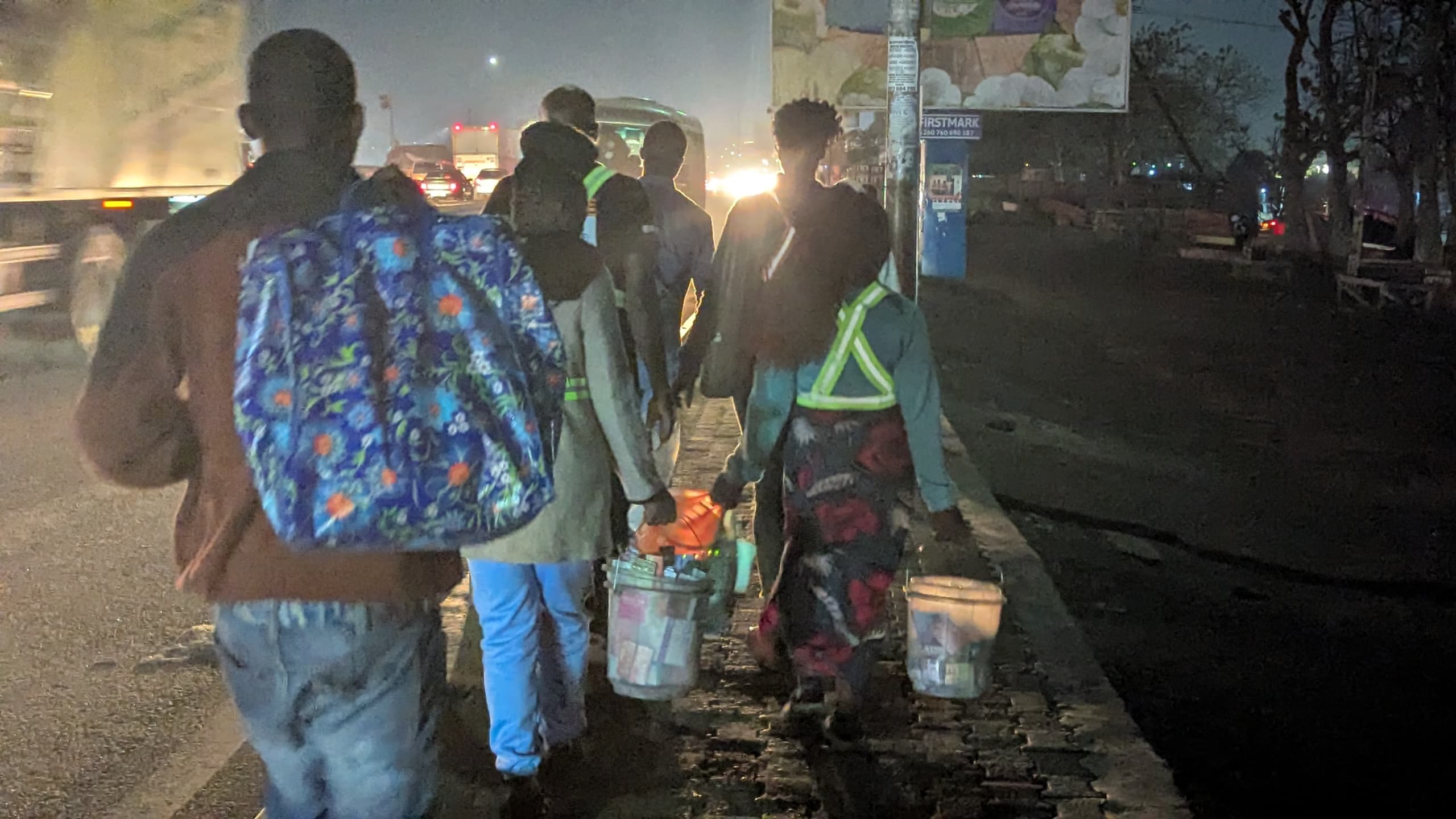
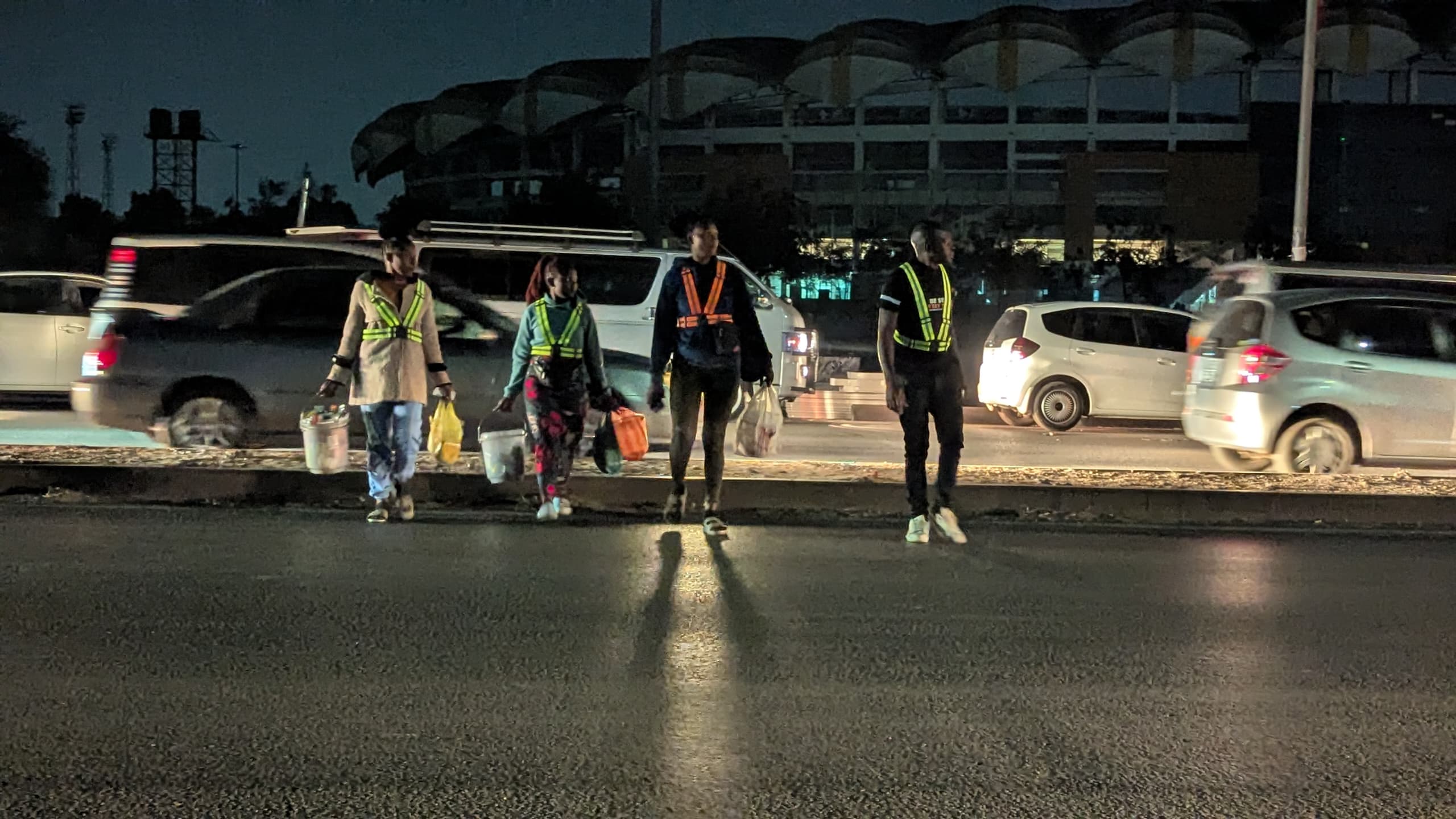
Traffic was heavy. Headlights and brake lights filled the road. Between the vehicles were pedestrians walking home, cyclists, motorcycle riders, people carrying goods, wheelbarrow pushers and handcart operators.
Some were difficult to distinguish against the dark road environment until vehicle headlights reached them.
That is where the Zambia Road Safety Trust, ZRST, chose to work.
The Arrive Alive, Be Seen at Night Campaign was deliberately taken onto the road after dark, at the time and place where the visibility problem could be seen rather than described in a meeting room.
Community-funded action: This activity was supported by a US$1,000 donation arranged through Bart using GoFundMe, with most of the support coming from individual donors in the United States. Their contribution allowed ZRST to put practical road safety support directly into the hands of vulnerable road users in Lusaka.
Why this work matters
Zambia’s road crash figures show why people outside vehicles require much greater protection.
According to the Zambia Police Service 2025 annual road traffic figures, the country recorded 38,712 road traffic crashes in 2025. There were 2,068 fatal crashes, resulting in 2,567 deaths, compared with 2,199 deaths in 2024. A further 7,045 people were seriously injured.
Pedestrians were the single largest group among those killed. Police figures recorded 934 pedestrian deaths, about 36 percent of all road deaths. Bicycle riders accounted for 181 deaths and bicycle passengers another 46. Together, 227 people using bicycles were killed.
Lusaka Province alone recorded 20,230 crashes, 52.3 percent of the national total.
Zambia’s longer-term evidence points in the same direction. The Road Safety in Zambia Investment Case reported that pedestrians accounted for 46 percent of road traffic deaths in 2020, while cyclists accounted for another 14 percent. It identified speed management, roadside pathways and safe crossings among the measures requiring investment.
Time of day also deserves attention. An analysis published by the Zambia National Public Health Institute, based on 51 major crashes identified through open-source surveillance between January 2023 and April 2025, found that the largest share, 31 percent, occurred during the evening. The researchers also noted that earlier RTSA data showed the highest number of crashes occurring between 18:00 and 20:00 hours.
ZRST treats the 31 percent finding cautiously because it came from a limited open-source surveillance sample rather than the complete national Police crash database. But together with the national road death figures and what our team observed on the road, it reinforces the case for paying greater attention to evening and nighttime travel.
What ZRST did
ZRST teams worked directly along the Heroes Stadium corridor from approximately 19:00 hours.
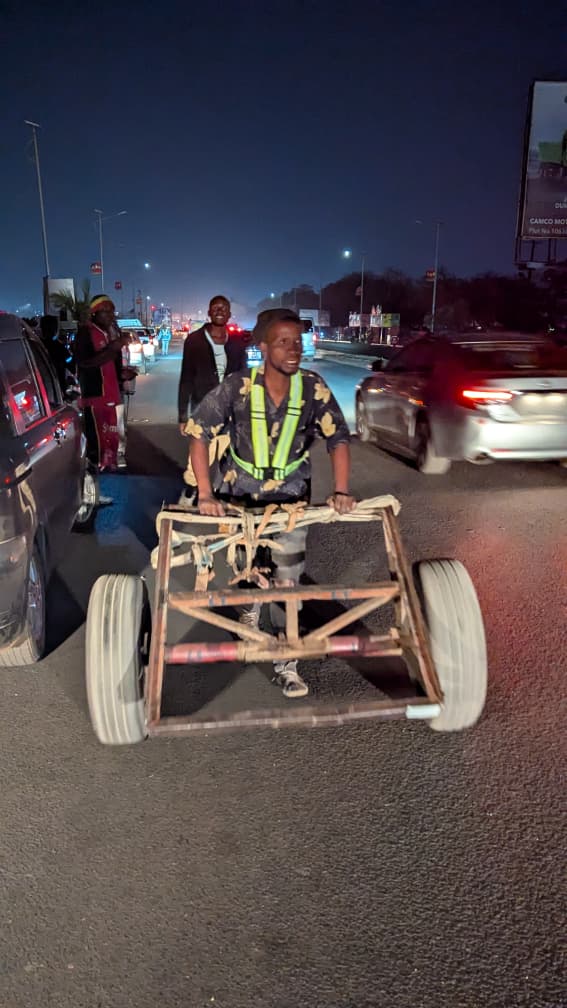
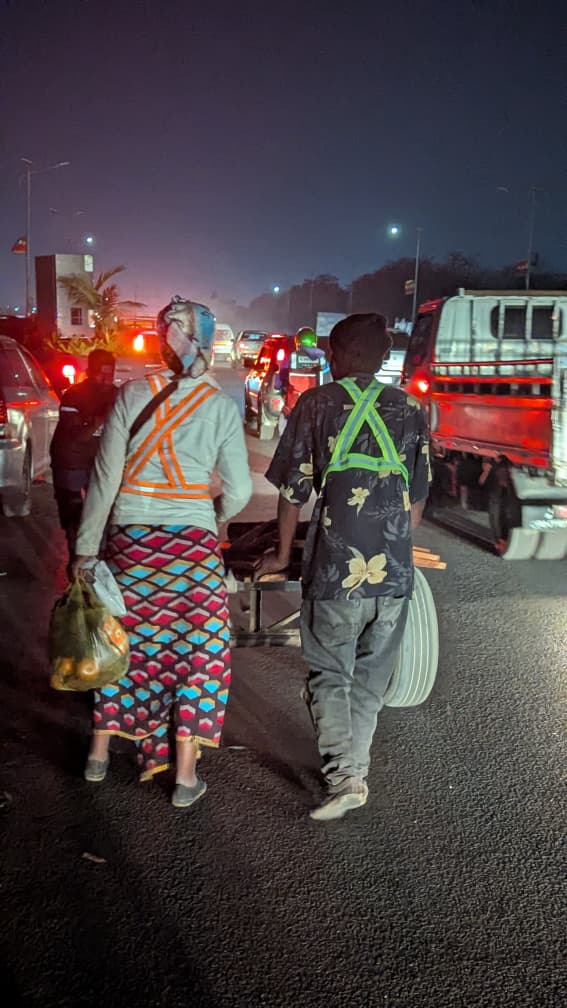
The campaign combined direct road safety education with practical action. Team members spoke face to face with pedestrians, cyclists and other vulnerable road users. Reflective belts and sashes were fitted to people travelling after dark. Reflective tape was applied or promoted for bicycles, motorcycles, wheelbarrows and handcarts.
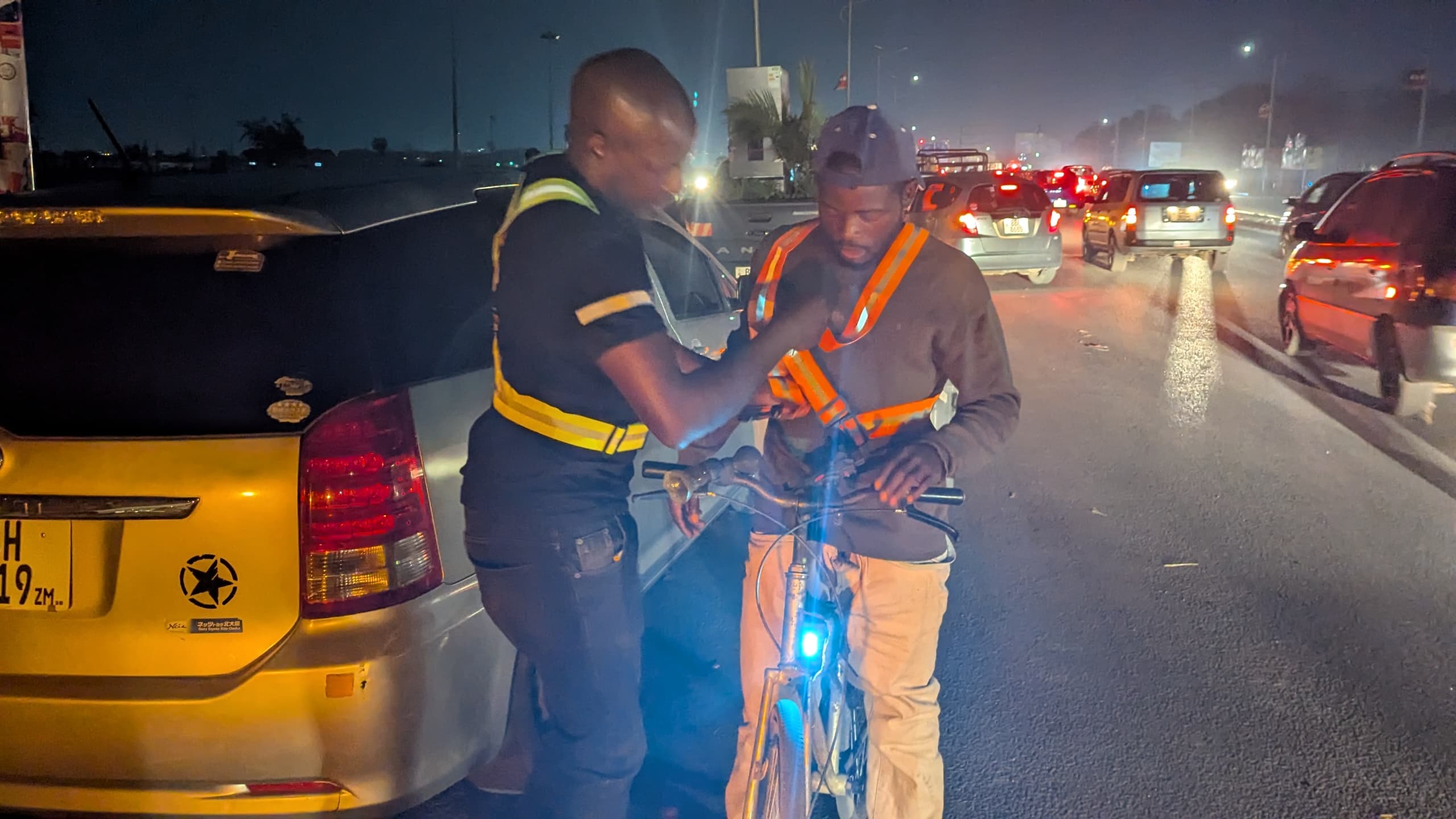
ZRST also used the road environment itself as a demonstration. Participants could see what happened when reflective material was illuminated by headlights. Instead of being told about visibility in theory, they could see the difference immediately.
More than 1,330 people reached in one evening
By the end of the activity, ZRST had directly reached more than 1,330 vulnerable road users.
The campaign deliberately went beyond pedestrians and cyclists. It included motorcycle riders, roadside workers, people transporting goods, wheelbarrow pushers, handcart operators and others whose daily journeys or livelihoods place them close to moving traffic after sunset.
It is important to be precise about what that number means.
More than 1,330 is a count of people directly reached during the campaign. It is not a count of lives saved or crashes prevented.
ZRST does not convert activity numbers into safety outcomes that have not been measured.
What changed that evening
The immediate change was visible.
Before reflective material was fitted, some of the road users encountered by the team were difficult to distinguish against the nighttime road environment. Once reflective belts, sashes or tape were illuminated by headlights, bright outlines and points of light made people and equipment easier to identify.
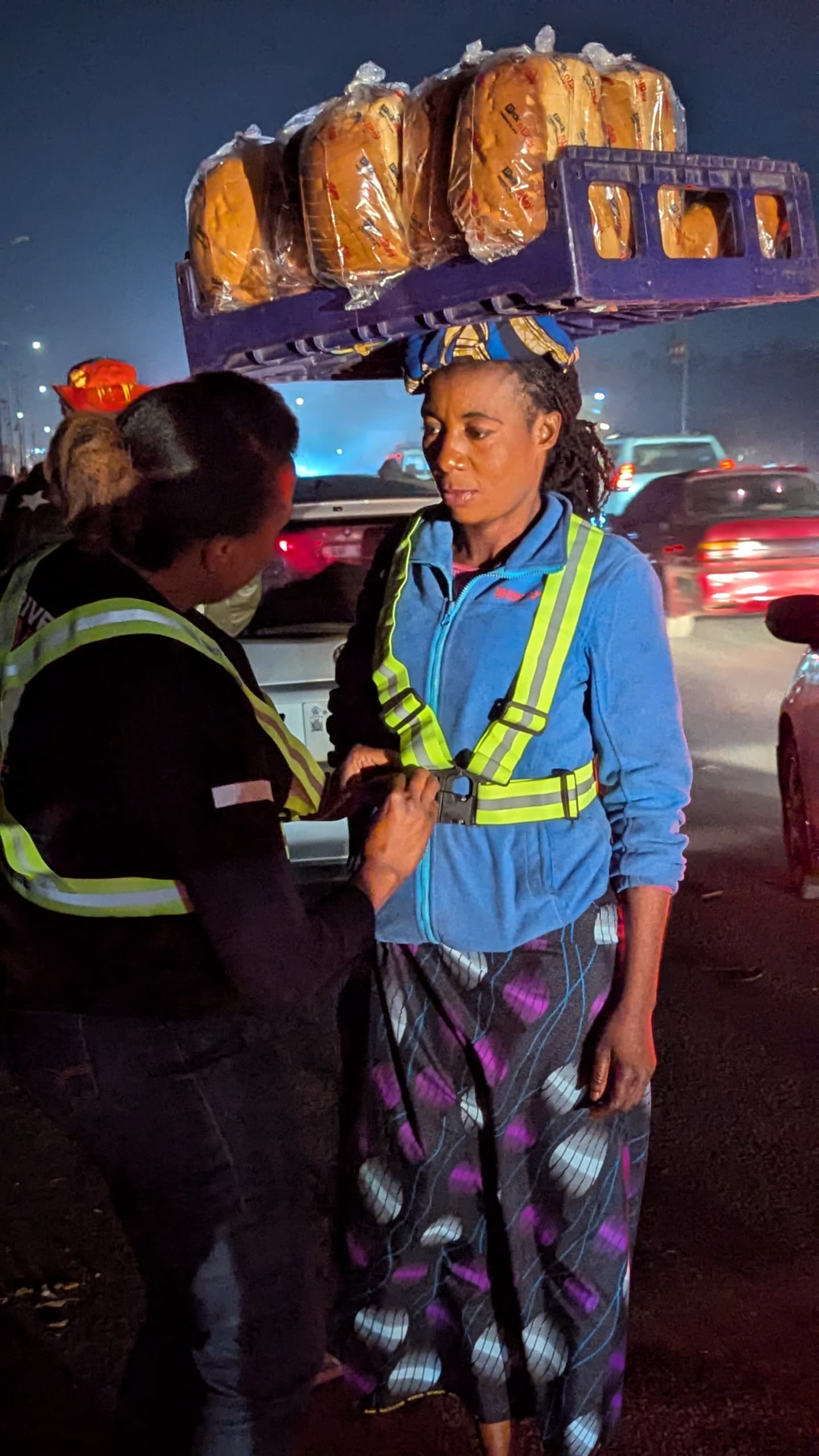
This is the strongest claim the evidence from the evening allows us to make: reflective material improved the conspicuity of participating road users when illuminated.
A photograph of a reflective strip catching a headlight does not demonstrate that a collision was prevented. Nor does it demonstrate that road deaths fell.
Those are different questions, and they require proper monitoring over time.
The human story behind nighttime mobility
It would be wrong to interpret this campaign as a message that pedestrians and cyclists are responsible for being injured because of what they wear.
Many people ZRST encountered were walking, cycling, transporting goods or working beside the road. A cyclist may depend on a bicycle because it is affordable. A trader may be returning from a market. A person pushing a handcart may be earning an income. A motorcycle rider may still be working when daylight ends.
These journeys will continue.
The road safety question is therefore not simply how to tell vulnerable road users to protect themselves. It is how to make the transport system safer around the journeys people actually have to make.
What a reflective belt cannot do
A reflective belt can help another road user see someone earlier.
It cannot build a footpath.
It cannot provide street lighting.
It cannot create a safe crossing.
It cannot separate a cyclist from faster motor traffic.
And it cannot make a driver slow down.
This is why ZRST places Arrive Alive within the Safe System approach to road safety. The World Health Organization describes a Safe System as one designed around human vulnerability and human error, so that mistakes on the road do not result in death or serious injury.
That requires safer speeds, safer roads, safer vehicles, safe road use and effective post-crash response.
Zambia’s Road Safety Investment Case makes the same systemic argument. It identifies speed measures, roadside pathways and road crossings among priority interventions and estimates that road crashes cost the Zambian economy approximately ZMW16.7 billion each year, equivalent to 4.7 percent of GDP at the time of the study.
Reflective material therefore sits alongside, not instead of, permanent road safety measures.
Drivers also retain a responsibility to control speed, remain alert and give pedestrians, cyclists and other vulnerable road users adequate space.
What US$1,000 helped put on the road
There is another important part of this story.
The activity was supported through a US$1,000 GoFundMe donation arranged through Bart, with most of the support coming from individual donors in the United States.
This was not a major institutional grant.
It was individual giving connected to a Zambian organisation capable of putting the support to work on the ground.
On 7 August, that support became face-to-face conversations beside a busy Lusaka road. It became reflective material fitted to people walking and cycling home. It became tape placed on bicycles and carts. It enabled ZRST to reach more than 1,330 people in one evening and, just as importantly, to learn more about the nighttime road environment in which those people travel.
ZRST thanks Bart and the individual donors whose contributions made the activity possible.
The experience also raises a bigger question: what could we learn if a small practical intervention like this were followed by systematic measurement and action on the road conditions themselves?
From one evening to a measured corridor programme
The strongest legacy of 7 August should not be the number of belts distributed.
In one evening ZRST identified, reached and worked directly with a substantial population of people exposed to nighttime traffic risk on a specific Lusaka corridor.
That gives us a starting point.
The next phase should develop Arrive Alive into a measured pedestrian and cyclist corridor safety programme.
ZRST wants future work to combine practical visibility measures with nighttime street audits, pedestrian and cyclist counts, vehicle speed observations, lighting assessments, road-user knowledge checks, crash history and documentation of missing or inadequate walking and cycling infrastructure.
After the intervention, ZRST should return to the same corridors and ask harder questions.
- Are people still using the reflective materials?
- What vehicle speeds are being recorded?
- Where are pedestrians crossing?
- Which lighting, footpath and crossing problems remain?
- What action has been taken by responsible authorities?
- What do crash and casualty data show over a meaningful period?
That is how an outreach activity becomes an evidence-based programme.
What we want partners to support next
ZRST welcomes discussions with foundations, companies, individual donors, local authorities, researchers and technical partners interested in taking the next step.
The proposition is not simply to fund more reflective belts.
It is to develop a locally led vulnerable road user safety programme that combines immediate practical support with nighttime risk mapping, speed measurement, pedestrian and cyclist data, community engagement, road safety audits, engagement with responsible authorities and follow-up monitoring.
A reflective sash can help a person become easier to see tonight.
The larger responsibility is to make the road safer for that person tomorrow.
The US$1,000 contribution behind this campaign helped ZRST begin that work with more than 1,330 people in one evening. Our next task is to turn what we saw and learned on the Heroes Stadium corridor into a programme whose results can be measured, improved and, where the evidence supports it, replicated elsewhere.
Interested in supporting the next phase?
ZRST is seeking funding and technical partners for pedestrian and cyclist safety, nighttime risk assessment, speed management, safer infrastructure and evidence-based corridor interventions in Zambia.
Contact the Zambia Road Safety Trust about partnership opportunities →
Sources
Zambia Police Service annual road traffic figures for 2025, compiled by ZRST
Zambia National Public Health Institute, The Health Press Zambia, road traffic crash surveillance analysis
Road Safety in Zambia, Investment Case
World Health Organization, Road Traffic Injuries and Safe System approach