ZRST success story
Success Story: Zambia’s 30 km/h School-Zone Law
From national advocacy to practical protection for children walking to school.
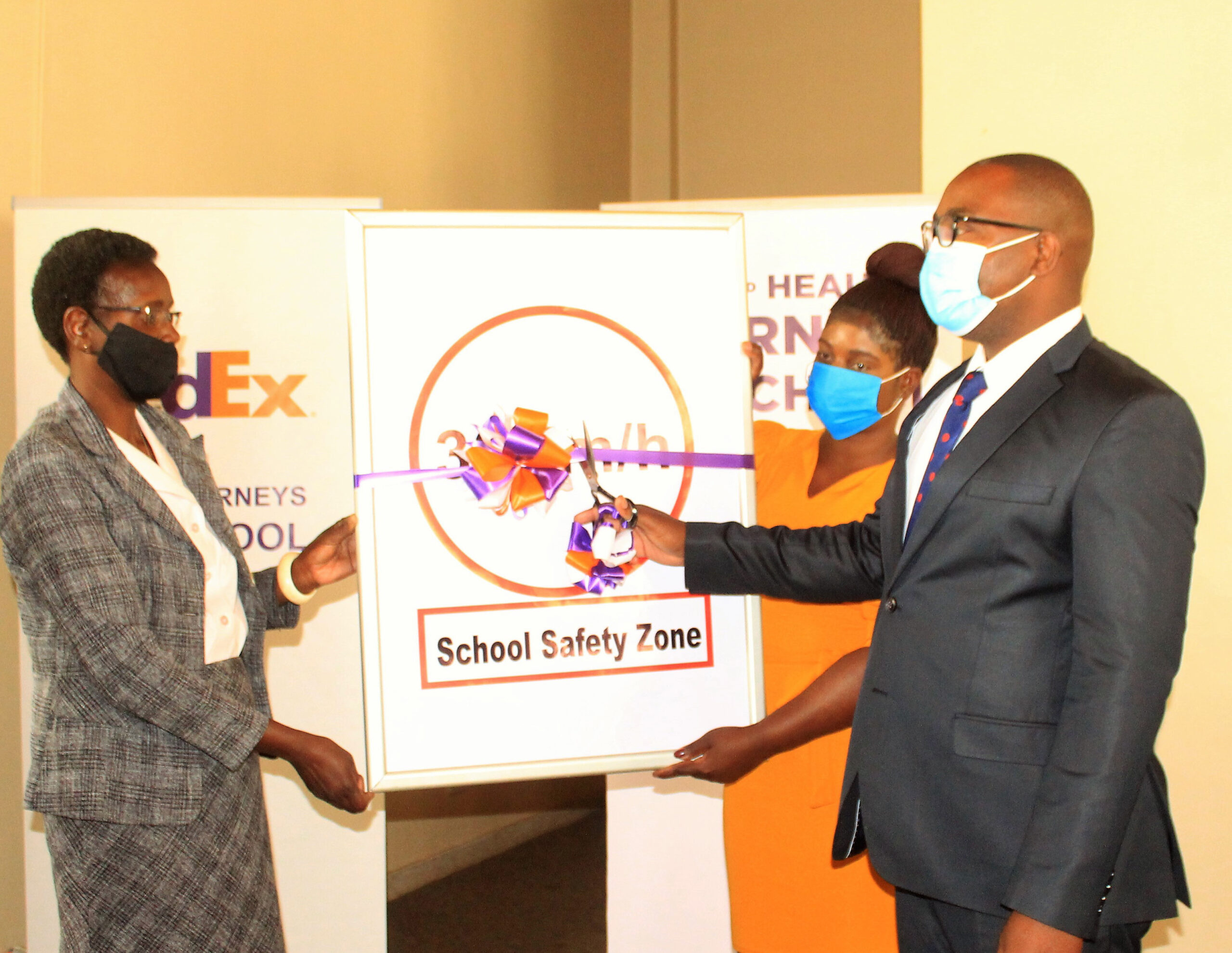
Zambia introduced a nationwide 30 km/h school-zone speed limit through Statutory Instrument No. 7 of 2020. Since then, ZRST has continued working with government, councils, police, funders, schools and technical partners to support practical implementation at selected high-risk school zones.
The legal milestone matters because it creates a national basis for safer school-zone design, speed management, enforcement support, road safety education and evidence-led investment around schools.
Why 30 km/h matters
Lower speeds give children a better chance of survival.
Children walking to school are among the most exposed road users. A 30 km/h school-zone limit gives drivers more time to see, react and stop, while reducing the severity of crashes when collisions occur. Lower-speed environments also make crossings, school gates and walking routes safer and more predictable.
More reaction time
Lower speeds give drivers more time to respond to children crossing, walking near the carriageway or moving unpredictably around school entrances.
Lower crash severity
Where crashes occur, lower impact speeds reduce the risk of fatal and serious injury, especially for pedestrians and children.
Safer school environments
Speed limits work best when supported by signs, crossings, calming measures, enforcement and school-based engagement.
The legal milestone
A national speed limit for school zones.
The Road Traffic (Speed Limits) Regulations were gazetted as Statutory Instrument No. 7 of 2020, establishing a nationwide 30 km/h speed limit for school zones in Zambia. Amend records that Zambia was the only country among the nine campaign countries to institute a new nationwide school-zone speed limit under the 2017–2019 advocacy programme.
The law belongs to the Government of Zambia. The advocacy and implementation journey involved ZRST, Amend, FIA Foundation, Puma Energy Foundation, government agencies, local authorities, schools, police, funders and technical partners.
Legal instrument
Statutory Instrument No. 7 of 2020 created the national legal basis for 30 km/h school zones.
Advocacy achievement
The school-zone speed-limit campaign formed part of a wider African advocacy programme supported by international road safety partners.
Implementation challenge
The next phase required practical delivery: signage, crossings, traffic calming, enforcement readiness and monitoring.
ZRST’s role
ZRST’s role in the success story.
ZRST’s contribution has been to advocate for child road safety, convene partners, support implementation and maintain attention on school zones that still need practical protection.
Advocacy
School-zone speed-limit advocacy, public communication, stakeholder engagement and technical arguments for child protection.
Convening
Engagement with ministries, RTSA, Zambia Police, Lusaka City Council, education stakeholders, international partners and road safety NGOs.
Implementation support
Support for school-zone assessments, prioritisation, signs, crossings, traffic calming, school engagement and enforcement readiness.
Evidence and follow-through
Use of data, school-zone monitoring, partner reporting, project evidence and continued advocacy for schools still needing protection.
Timeline of progress
From advocacy to implementation.
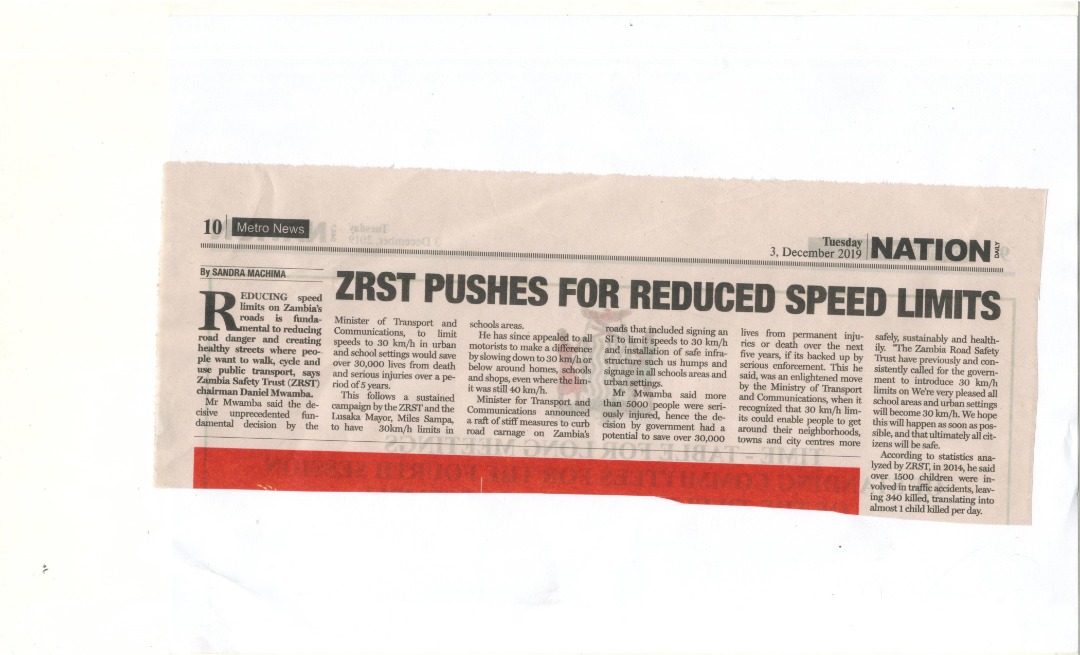
The 30 km/h school-zone success story developed over several years, from advocacy and legal reform to selected school-zone implementation, enforcement support, measurement and partner-funded expansion.
Nine-country school-zone advocacy programme supported by Amend, FIA Foundation and Puma Energy Foundation, with ZRST carrying national advocacy and stakeholder engagement in Zambia.
Statutory Instrument No. 7 of 2020 gazetted, establishing the national legal basis for 30 km/h school zones.
Public awareness, early school-zone signage and Streets for Life / Car Free Day activity helped keep the new speed limit visible in public discussion.
Through LEARN-related work and partner engagement, ZRST supported coalition-building, school prioritisation, police engagement and speed-enforcement support.
UNDP / UN Road Safety Fund-supported school-zone infrastructure work in Lusaka helped move selected schools from policy commitment to practical safer-road interventions.
TRANS-SAFE measurement across selected school zones and Yango-supported school-zone expansion contributed to further implementation, learning and evidence gathering.
What changed on the ground
A law becomes meaningful when it is implemented.
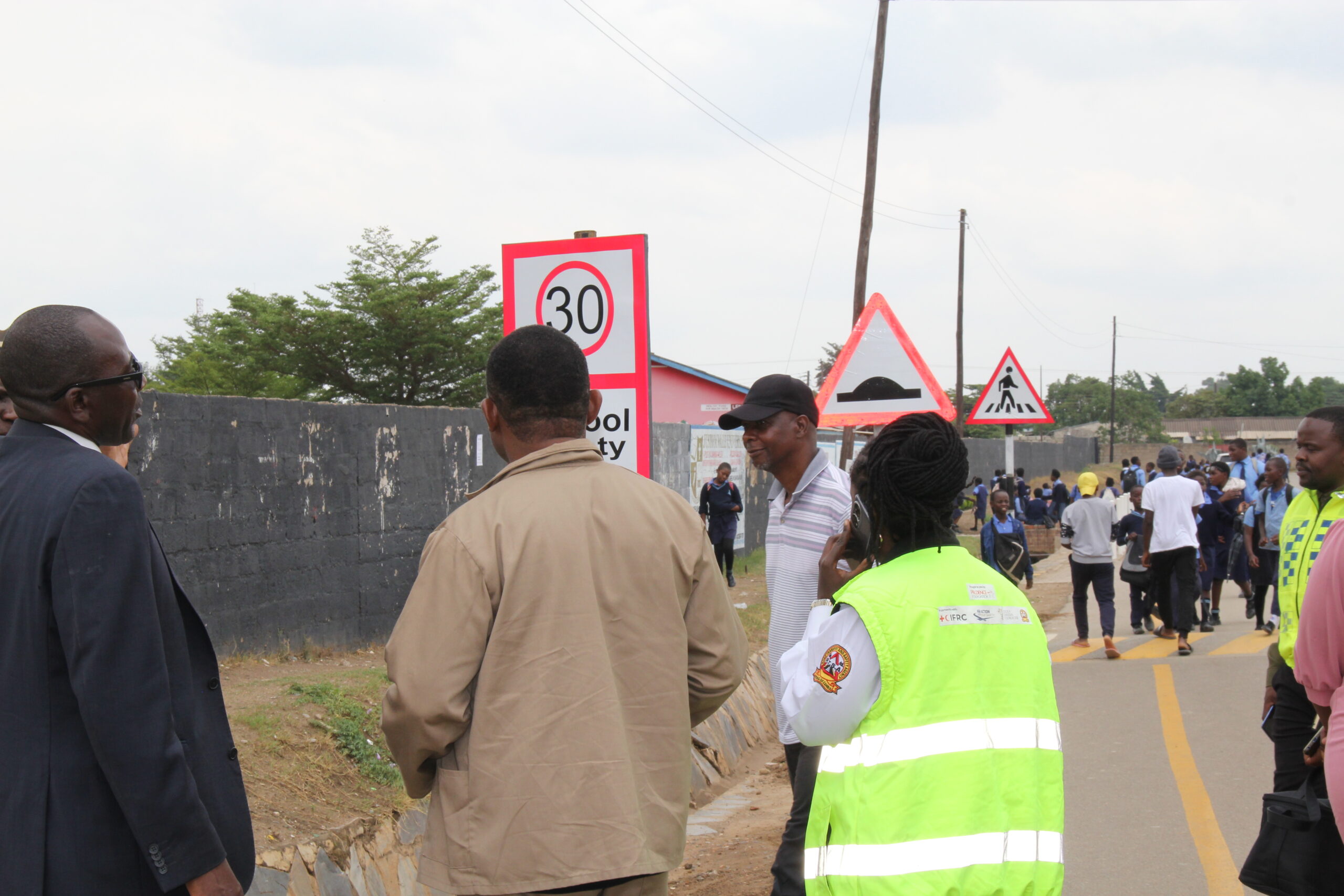
ZRST’s school-zone work focuses on practical protection where implementation has taken place. Supported school zones have included combinations of signs, safer crossings, traffic-calming measures, school engagement, speed surveys, enforcement engagement and road safety education.
Visible school-zone treatment
- 30 km/h signs at selected school zones
- Zebra crossings and safer crossing points
- Traffic-calming measures where applicable
- Improved visibility around school entrances
School and community engagement
- Road safety education
- Teacher and learner engagement
- School safety support where applicable
- Community awareness around school gates
Evidence and enforcement support
- Speed surveys and risk assessments
- School-zone prioritisation
- Police and enforcement engagement
- Monitoring and partner reporting
Shared credit
A shared achievement.
Zambia’s 30 km/h school-zone law and its implementation journey should be understood as a collective achievement. ZRST’s role has been important, but the progress depends on public institutions, international partners, funders, technical organisations, schools and communities working together.
External evidence
Evidence from external sources.
The sources below are hosted outside ZRST and help document the legal instrument, advocacy record, partner implementation and measured school-zone work.
| Source | What it confirms | Why it matters | Link |
|---|---|---|---|
| ZambiaLII | Road Traffic Speed Limits Regulations, Statutory Instrument No. 7 of 2020. | Provides the legal basis for Zambia’s 30 km/h school-zone speed limit. | View legal instrument |
| Amend | Nine-country 30 km/h advocacy programme and Zambia’s distinction among campaign countries. | Provides independent partner evidence of the advocacy programme and Zambia outcome. | View Amend project |
| Star Rating for Schools | ZRST sustainable mobility work and references to the 30 km/h advocacy record. | Connects ZRST’s advocacy and implementation work to recognised school-zone safety practice. | View SR4S source |
| Global Alliance of NGOs for Road Safety | Implementation of the 30 km/h law through LEARN-related coalition work. | Shows that implementation required coordination, data and enforcement support. | View LEARN source |
| FIA Foundation | Kitwe school road speed initiative supported through the Child Health Initiative. | Documents practical implementation of 30 km/h school-zone work beyond Lusaka. | View FIA source |
| EU TRANS-SAFE | Measured work across selected Lusaka school zones. | Shows how implementation can be assessed through data, school-zone monitoring and Safe System learning. | View TRANS-SAFE source |
| UNDP Zambia / UN Road Safety Fund | School-zone infrastructure and non-motorised transport work in Lusaka. | Provides external evidence of partner-supported implementation around selected schools. | View UNDP source |
Lessons for future implementation
What this success story teaches.
Zambia’s 30 km/h school-zone law shows that road safety reform requires more than a legal instrument. It requires implementation funding, technical design, enforcement support, community engagement and monitoring.
Law needs delivery
A national speed limit creates the mandate, but children benefit when schools receive signs, crossings, traffic calming, enforcement readiness and education.
Data improves prioritisation
Crash data, speed counts, traffic counts and school-zone assessments help direct limited resources to high-risk schools first.
Partnerships make scale possible
Government, councils, police, schools, donors, companies and technical partners each have a role in turning national policy into safer streets.
Partner with ZRST
Help implement safe school zones in Zambia.
ZRST is seeking partners to support school-zone assessments, signs, crossings, traffic-calming measures, school engagement, monitoring and evidence reporting at high-risk schools.