Zambia Road Safety Trust
Zambia’s Road Crash Data Has a Youth Blind Spot
Zambia’s road-crash data has a youth blind spot
National crash figures do not publish casualties aged 17–25 as a distinct group. This makes it difficult to identify and respond to road risks affecting young people.
Briefing summary
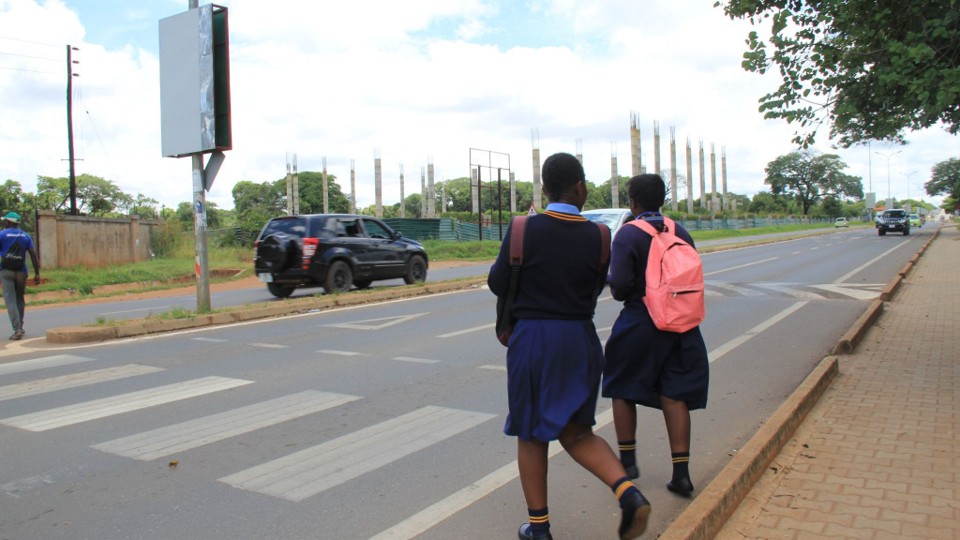
Zambia reports casualties aged 0–16 separately. People aged 17 and above are included in the overall totals without published age bands. A 17-year-old pupil, a 21-year-old student and a 24-year-old apprentice may therefore be counted as casualties, but cannot be identified as part of a youth road-safety pattern.
ZRST is asking the responsible authorities to record each casualty’s age and publish national figures using consistent age groups.
Young adults are present in the totals but absent from the analysis.
The Zambia Police Service publishes national totals for crashes, deaths and serious injuries. It also identifies casualties aged 0–16. Beyond that category, the published figures do not show the age distribution of casualties.
Casualties aged 0–16 are published separately. Casualties aged 17–25, and other adult age groups, are not. The practical effect is that youth road risk cannot be compared reliably by age, route, road type or travel context.
In 2025, Zambia recorded 38,712 crashes, 2,567 deaths and 7,045 serious injuries. The published totals do not show how many of those killed or injured were aged 17–25.
Source: Zambia Police Service Annual Road Crash Report 2025, as cited by ZRST. Police-recorded figures do not estimate the full national road-injury burden.
Better decisions require more complete information.
Without age-disaggregated data, public institutions cannot determine whether particular roads, routes or transport conditions place young people at greater risk. Universities, councils, transport operators and development partners also lack a reliable baseline for youth-focused action.
Two fatal crashes involving university students at Mulungushi University on 3 May 2026 and the University of Lusaka on 9 May 2026, illustrate the relevance of the issue. They do not establish a national trend, but they show why the age of every casualty should remain visible in national reporting.
Complete age data would make it possible to identify roads and travel conditions associated with youth casualties, target enforcement and infrastructure more effectively, assess whether youth road-safety measures are working, and strengthen public reporting and institutional accountability.
Record age consistently and publish usable age bands.
ZRST proposes that the Zambia Police Service, the Road Transport and Safety Agency and national statistical authorities revise the reporting framework so that every recorded casualty has an age and the annual figures use consistent categories.
Proposed published age bands: 0–16 · 17–25 · 26–35 · 36–59 · 60 and above
A manageable reporting reform.
The change does not require a separate national data system. The responsible institutions should first agree consistent age categories, data fields and reporting responsibilities. The existing crash-report form and recording guidance can then be updated so that casualty age is captured at the point of reporting. The revised process should be tested in an agreed area, reviewed for completeness and usability, and then incorporated into national reporting.
ZRST proposes that the Zambia Police Service record complete casualty-age information; that RTSA coordinate reporting standards, analysis and publication; and that the Ministry of Transport and Logistics include age-disaggregated reporting in the relevant implementation framework. National statistical authorities could support definitions and quality assurance, while development partners could require appropriate age disaggregation in the programmes they support. ZRST is available to contribute technical input and assist with a defined pilot agreed with the responsible authorities.
These are proposals from ZRST and are not confirmed commitments by the institutions named.
ZRST is available to support technical discussion and a defined pilot.
A stronger reporting framework would help institutions identify youth road-risk patterns, direct resources and assess results.