Zambia Road Safety Trust
Advancing Non-Motorised Transport (NMT) in Lusaka: From Vision to Citywide Standards
The Zambia Road Safety Trust (ZRST) is pleased to share the successful completion of a major urban mobility initiative in Lusaka, delivered as a technical partner supporting Lusaka City Council under Vital Strategies’ Partnership for Healthy Cities (PHC).
This work focused on one clear outcome: helping Lusaka move from “good intentions” to a formal, city-approved framework that makes walking and cycling safer ,by design, by policy, and by standard practice.
In Lusaka, thousands of people walk or cycle daily ,children going to school, traders moving between markets, and workers commuting across busy corridors. Yet, streets are too often designed primarily for vehicles, leaving vulnerable road users exposed to high-risk speeds, unsafe crossings, and missing or inconsistent facilities.
To change this, cities need more than pilot projects. They need clear policy direction, technically credible design standards, legal alignment, political adoption, and public understanding ,so that safe walking and cycling infrastructure becomes the norm, not the exception.
Project focus and delivery period
ZRST supported Lusaka City Council to advance a structured policy process that included design development, stakeholder engagement, legal integration, formal approval, and public dissemination. The contract period ran from 30 May 2025 to 12 December 2025.
What we delivered
1) A detailed NMT policy proposal and design direction
ZRST supported the development of a detailed policy proposal to guide Lusaka’s approach to non-motorised transport.
This included introducing modern, practical NMT concepts appropriate for a growing African capital ,such as safer cycling facilities, shared-street concepts, and strengthened pedestrian infrastructure ,while ensuring alignment with the City’s technical departments.
2) Broad stakeholder engagement to secure buy-in
ZRST spearheaded a structured engagement process with councillors, stakeholders, technical teams, and community representatives, ensuring that the NMT framework reflected local needs and gained institutional support.
A key element was the development and validation of a multi-stakeholder engagement strategy that clearly defined roles for city technical departments, finance officials, and community representation within the NMT planning process.
3) Legal integration and standard-setting within city systems
A critical milestone was the legal review of the policy framework for compliance with city by-laws, land use policies, and road construction standards.
Most importantly, this process supported amendments to city infrastructure guidelines so that selected NMT designs could be formally incorporated as mandatory standards for new road projects, an institutional step that strengthens long-term sustainability.
4) Full Council adoption and formal ratification
The work culminated in a dedicated council process to adopt and approve the NMT policy framework ,moving it from draft form into an officially endorsed city pathway for implementation.
This aligns with the project’s planned sequence of securing formal authorization, building buy-in, completing compliance integration, and obtaining Full Council approval to enable implementation.
5) Citywide communication and public awareness
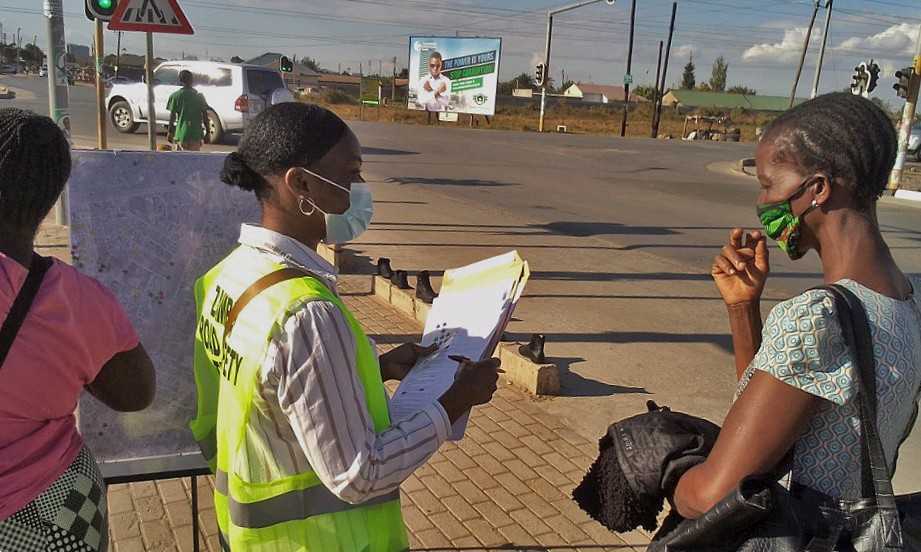
To ensure the framework was not only adopted but also understood and owned, ZRST supported community engagement across wards to disseminate the policy and strengthen public awareness.
The communication component included public-facing outreach such as media briefs, press engagements, printed materials, radio programmes, and road shows ,helping translate policy into community understanding and support.
Outcomes and early impact
This initiative delivered a high-leverage result: institutional readiness for safer walking and cycling in Lusaka. In practical terms, the project helped achieve:
• Clear policy direction for NMT as a core city priority, not an add-on.
• More consistent, safer design expectations, by embedding NMT design standards within the City’s infrastructure guidance for future road projects.
• Cross-city alignment and legitimacy, through structured buy-in from councillors, stakeholders, and community constituencies.
• Governance-backed implementation readiness, through a formal Council adoption pathway and a citywide dissemination approach that supports uptake.
Why donors should care: this is “systems change”
Many road safety and mobility initiatives stall because they remain pilots ,good infrastructure in one place, but no city mechanism to replicate it elsewhere.
This project tackled the problem at its root: city systems. By supporting Lusaka City Council to align technical design, policy, compliance, decision-making, and public communication, the initiative created conditions for scale ,so that safer walking and cycling infrastructure can be delivered more consistently over time.
Analogy for understanding: Establishing this NMT framework is like creating a permanent blueprint for renovating a house. Instead of just talking about improvements, the city now has official technical direction and an approved pathway ,so safer streets can be planned, delivered, and repeated for years to come.
________________________________________
With the policy pathway and standards strengthened, the next step is to translate this framework into visible street-level improvements and measurable safety gains. Donors and partners can accelerate impact by supporting:
• Demonstration corridors and school-zone “safe access” routes that show what the standards look like in practice
• Community-led monitoring and feedback loops to ensure infrastructure works for women, children, traders, and persons with disabilities
• Capacity-building for city teams and local contractors to apply NMT standards consistently
• Evidence and evaluation (before/after safety and accessibility outcomes) to guide replication across Lusaka and beyond
________________________________________
Partner with ZRST
For partnerships and support, contact: info@zambianroadsafety.org