Zambia Road Safety Trust
Lusaka on Foot and Wheels 2025: Engineering Safer Roads for People
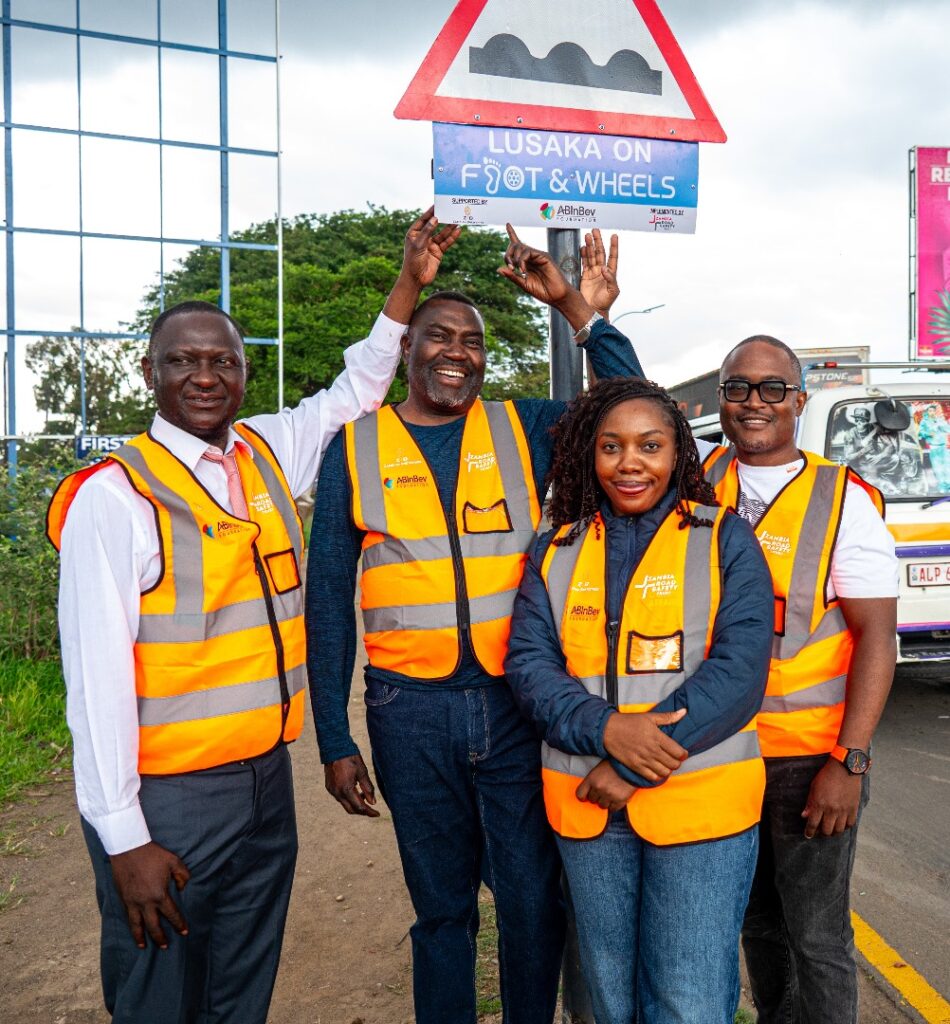
Road safety is not just about roads it’s about people. In 2025, the Lusaka on Foot and Wheels (LoFW) Engineering Initiative delivered targeted, life-saving improvements on some of Lusaka’s busiest and most dangerous corridors, where pedestrians, students, motorcyclists, and motorists interact daily.
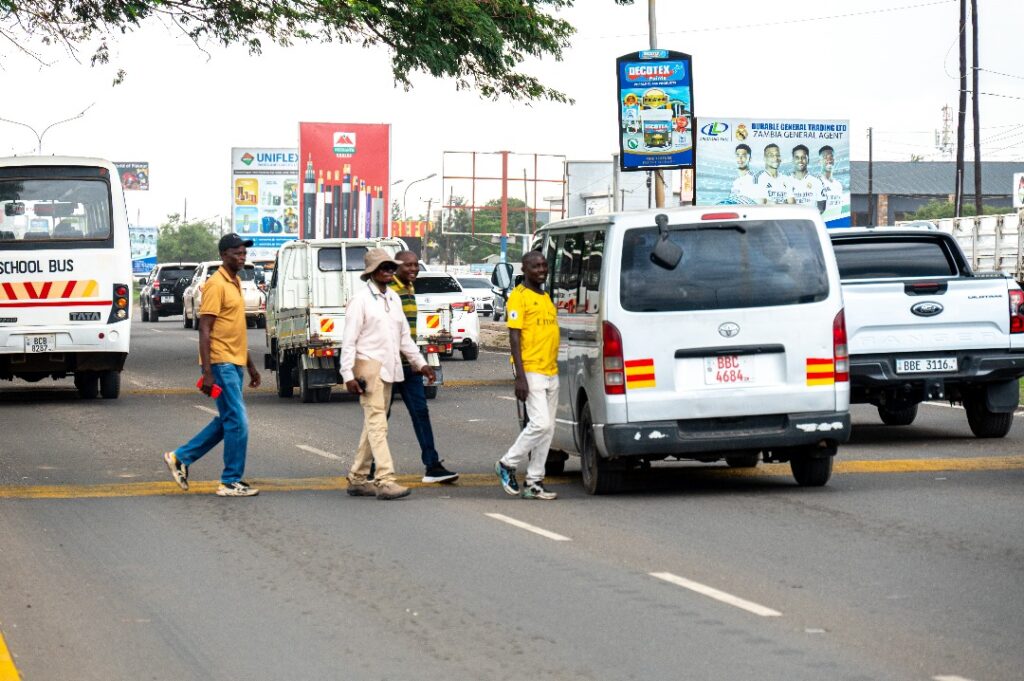
The project focused on Great East Road at the University of Zambia, Kafue Road near Mike’s Car Wash, and Great North Road at Ngwerere Roundabout areas characterized by extremely high pedestrian exposure and traffic volumes. Baseline assessments revealed the scale of the challenge: more than 373 students per hour were crossing Great East Road without protected facilities, while traffic volumes reached 773 vehicles per hour on Great East Road, 556 vehicles per hour on Kafue Road, and over 227 motorcycles per hour along the same corridor. These risks were compounded by speeding, with 7.8% of vehicles exceeding the 60 km/h urban speed limit, and some traveling above 80 km/h.
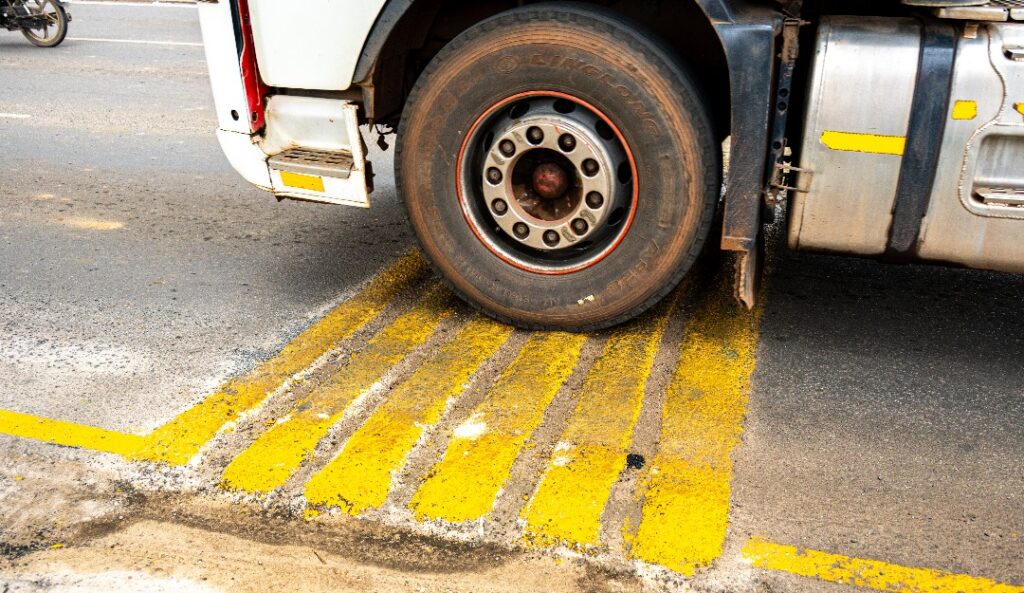
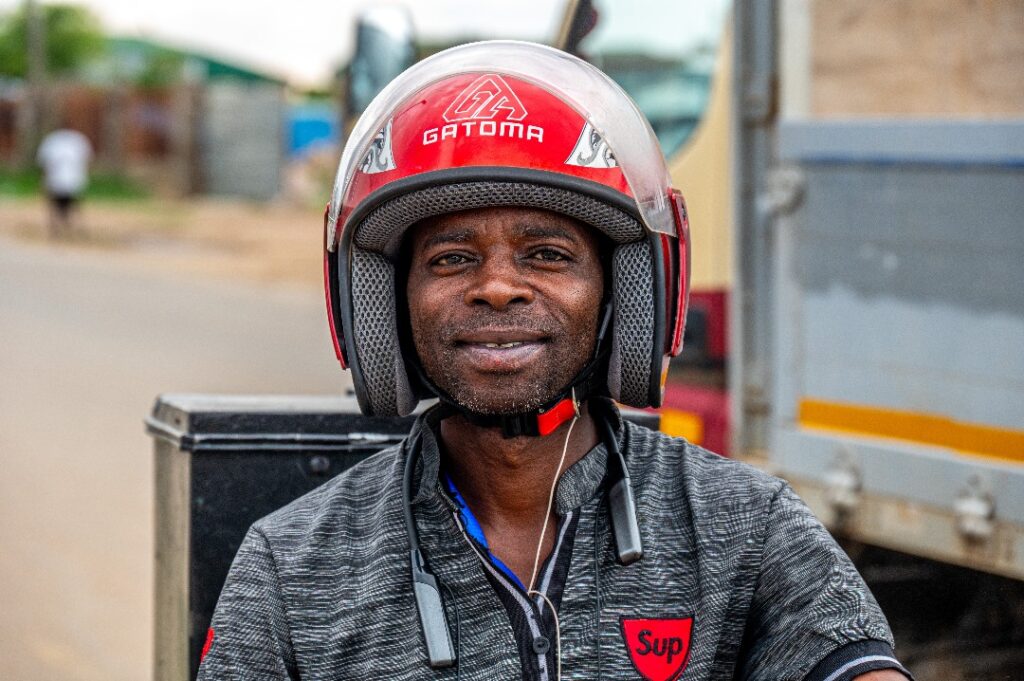
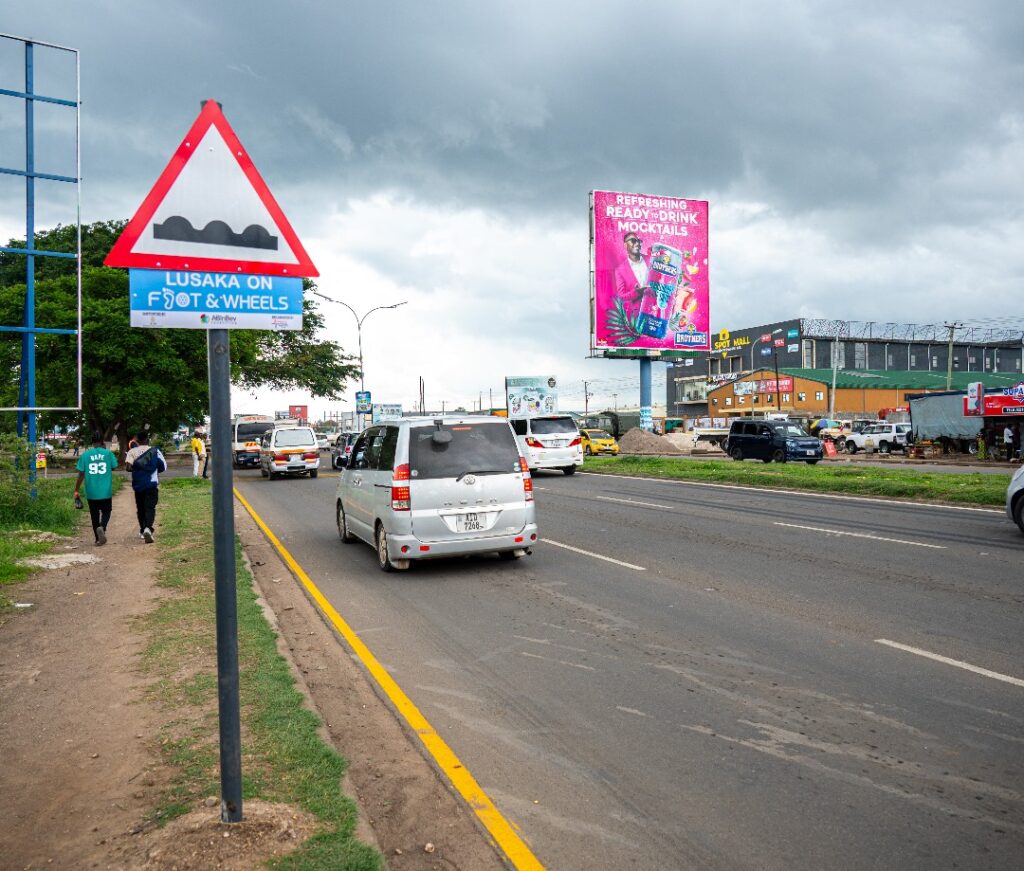
In response, the LoFW project introduced targeted traffic calming and safety engineering measures, including rumble strips, reflective road markings, enhanced traffic signage, and improved road delineation. These were complemented by on-street motorcycle safety training, focusing on rider visibility and safe mobility practices.
Post-intervention monitoring shows strong early improvements. On Kafue Road, compliance with the 60 km/h speed limit rose to 94.7% of vehicles, while traffic volumes dropped from approximately 783 vehicles per hour before intervention to about 307 vehicles per hour afterward during peak periods. These changes have resulted in safer pedestrian crossings, lower vehicle speeds, and improved perceived safety among motorcyclists and pedestrians.
This initiative is supported by the AB InBev Foundation and Zambian Breweries, and implemented by the Zambia Road Safety Trust (ZRST) in collaboration with the Zambia Police Service, Lusaka City Council, Road Transport and Safety Agency, and the Road Development Agency.
The Lusaka on Foot and Wheels project demonstrates how focused engineering interventions and strong partnerships can significantly reduce risk and protect vulnerable road users in busy urban environments. It is a powerful reminder that road safety is about safeguarding lives and building safer communities.