Case Study: Lusaka On Foot and Wheels — Transforming Urban Safety
December 28, 2025
Abstract
This case study examines the "Lusaka On Foot and Wheels" project, a targeted road safety initiative implemented in Lusaka, Zambia, from June to December 2025. Confronted with a severe urban road safety crisis where vulnerable road users (VRUs) constituted over 60% of traffic fatalities, the Zambia Road Safety Trust (ZRST), with support from the ABInBev Foundation, deployed a multi-faceted strategy. The project integrated low-cost engineering countermeasures, specialized safety education, and community engagement across three high-risk corridors. Post-intervention analysis reveals significant safety improvements, including a 78.3% reduction in road traffic incidents and a 94.7% compliance rate with the 60 km/h speed limit in a targeted area. These outcomes align with established research on the efficacy of the Safe System approach and combined interventions in low- and middle-income countries (LMICs). The study concludes that data-driven, context-specific, and community-integrated projects can yield substantial and cost-effective returns on investment in urban road safety, offering a replicable model for other African cities facing similar challenges.
1. Introduction: The Challenge
Sub-Saharan Africa confronts a disproportionate and escalating road safety crisis. Despite having the world's lowest level of motorization, with only 2.3% of the world's vehicles, the continent records the highest road traffic fatality rate at 26.6 deaths per 100,000 people (SSATP, n.d.-a). This public health epidemic, which claims an estimated 650 lives daily across Africa, disproportionately affects the most vulnerable road users (VRUs)—pedestrians, cyclists, and motorcyclists—who account for nearly half of all fatalities (SSATP, n.d.-a; World Health Organization, 2018). The economic cost is equally staggering, estimated at over US$150 billion in 2016 alone, representing a significant drain on developing economies and a major impediment to achieving Sustainable Development Goals (SDGs), particularly Target 3.6 (halving road traffic deaths) and Target 11.2 (providing access to safe, affordable, accessible, and sustainable transport systems) (SSATP, 2021).
In 2025, the city of Lusaka, Zambia, epitomized this continental challenge. Prior to the intervention detailed in this study, Lusaka was experiencing a severe road safety crisis where VRUs accounted for over 60% of all road traffic deaths. VRUs are defined as non-motorized road users and motorcyclists who lack the protective shell of a vehicle, making them particularly susceptible to severe injury in mixed-traffic environments (Barnard, 2023; Agyemang, 2021). This vulnerability is exacerbated in many African cities by infrastructure designed with a bias toward motorized traffic, often neglecting the needs of the majority who walk or use two-wheelers (Chebe, 2025; Urbanet.info, 2024).
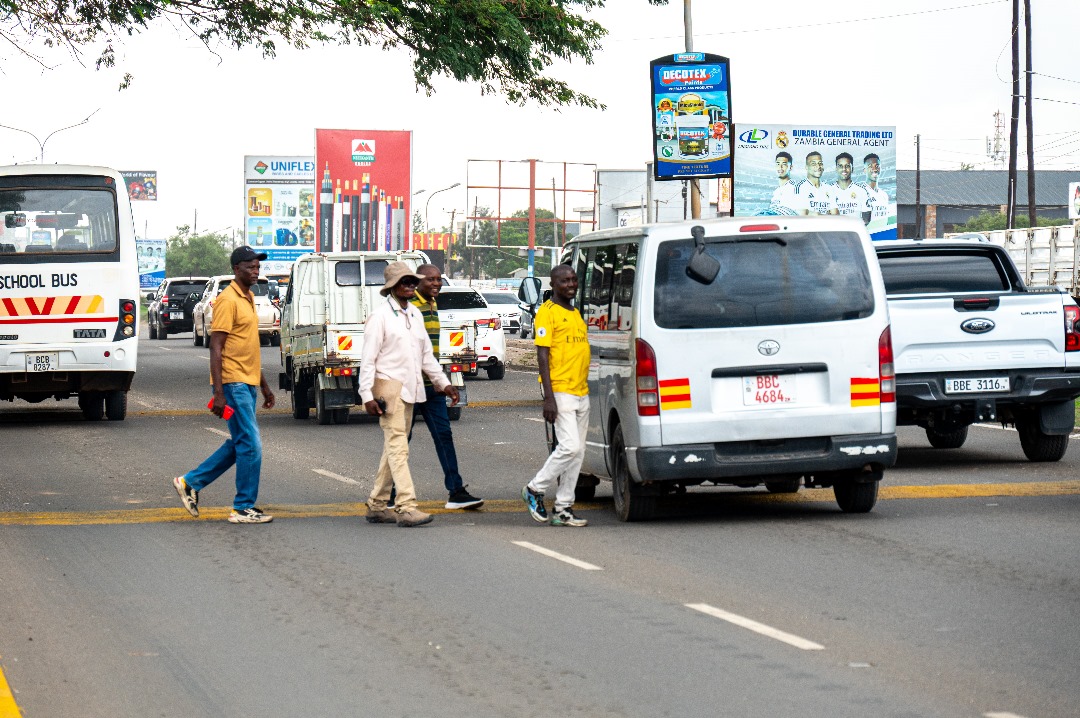
Data-driven site assessments conducted by the Zambia Road Safety Trust (ZRST) quantified the extreme risks at three key locations: Mike’s Car Wash on Kafue Road, the University of Zambia (UNZA) Main Entrance on Great East Road, and the Ngwerere Roundabout on Great North Road. These corridors, which serve approximately 25,000 people daily, were characterized by a dangerous combination of high-speed traffic and inadequate protective infrastructure. For instance, on Great East Road, a major arterial route, surveyors observed an average of 373 students per hour attempting to cross the dual carriageway without the protection of designated crossings or traffic calming measures. On Kafue Road, speed surveys revealed that over 5% of vehicles exceeded 80 km/h during peak hours, creating a high-energy environment where the probability of a fatal pedestrian crash approaches 90% (Federal Highway Administration, 2025). This situation mirrored findings from across the continent, where a lack of sidewalks, crossings, and speed management measures directly contributes to high VRU fatality rates (Urbanet.info, 2024). The "Lusaka On Foot and Wheels" project was conceived as a direct response to this localized, yet systemically representative, crisis.
2. Methodology: The Solution
To address the multifaceted nature of Lusaka's road safety problem, the "Lusaka On Foot and Wheels" project adopted a comprehensive, multi-sectoral strategy grounded in the principles of the Safe System approach. This approach acknowledges human fallibility and aims to create a road system where crash impacts do not result in death or serious injury, shifting responsibility from solely the road user to include system designers and managers (Barnard, 2023; SSATP, 2025). With a modest budget of USD 25,000, the project leveraged collaboration between the Lusaka City Council, Zambia Police, and the Road Transport and Safety Agency (RTSA) to implement a three-pillar solution.
2.1 Pillar 1: Low-Cost Engineering Interventions
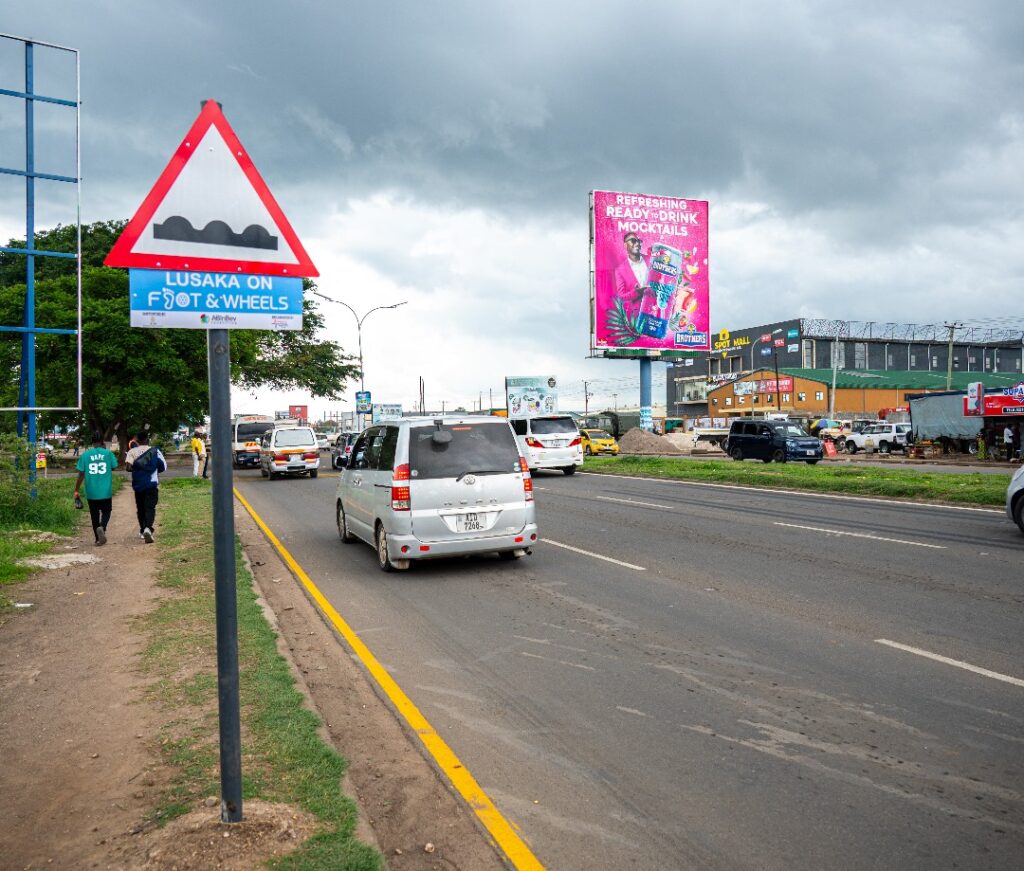
Recognizing that infrastructure modification is a cornerstone of sustainable safety improvements, the project focused on proven, low-cost traffic engineering measures designed to alter driver behavior by physically modifying the road environment. This aligns with extensive research demonstrating that such interventions can be highly cost-effective, particularly in LMICs (Chisholm et al., 2012; Habyarimana & Zampieri, 2011). The implemented measures included:
- Rumble Strips: Installed on the approaches to high-risk zones, particularly on Kafue Road, to provide auditory and tactile warnings to drivers, encouraging speed reduction. A recent study in Addis Ababa, Ethiopia, found that the installation of rumble strips combined with speed humps led to a 25.08% reduction in mean operating speeds and a 51.14% drop in total crashes (Tulu et al., 2025).
- High-Visibility Signage and Markings: The project deployed high-visibility reflective signage to alert drivers to upcoming hazards, pedestrian crossing zones, and speed limits. This was complemented by enhanced lane markings. Research confirms that high-visibility crosswalks can reduce pedestrian injury crashes by up to 40% (Federal Highway Administration, n.d.-a), and effective signage improves driver perception and decision-making, especially when conveying clear, actionable information (Ahmed & Tsubota, 2024).
These engineering solutions were selected for their rapid deployability and proven effectiveness in managing vehicle speeds—a critical factor in reducing crash severity for VRUs (Ralaidovy et al., 2018).
2.2 Pillar 2: Targeted Safety Education and Behavior Change
The second pillar focused on enhancing the safety skills and awareness of a particularly high-risk group: commercial motorcyclists. This approach is consistent with behavior change intervention (BCI) theory, which posits that targeted education can modify risky behaviors by improving knowledge and addressing psychosocial factors (Fanai et al., 2025). Specialists from RTSA and ZRST conducted intensive safety training for 150 motorcycle riders. The curriculum focused on:
- Safe Mobility Practices: Training covered defensive riding techniques, adherence to traffic laws, and hazard perception.
- Rider Conspicuity: Emphasis was placed on improving rider visibility through the use of reflective gear and appropriate lighting, a critical factor in preventing collisions with other vehicles.
A systematic review of BCIs in LMICs found that educational programs, especially when combined with practical components and peer engagement, can be effective in improving driver behavior (Fanai et al., 2025). By targeting commercial riders, the project aimed to create a positive ripple effect within the transport community and improve safety for both riders and their passengers.
2.3 Pillar 3: Community Engagement and Ownership
To ensure the sustainability and local relevance of the interventions, the project embedded community engagement at its core. This strategy acknowledges that top-down solutions often fail without local buy-in and that residents possess invaluable knowledge about their environment (Good practices…, 2021). The project team:
- Facilitated Co-Design Meetings: Engagements with local community leaders, residents, and business owners (such as at Mike's Car Wash) allowed for the co-design of solutions that addressed specific, ground-level concerns. This collaborative process is a key component of successful urban safety strategies (SSATP, 2021).
- Established a Feedback Mechanism: A system was created for residents to report emerging road hazards or issues with the new infrastructure, enabling ongoing monitoring and maintenance. This fosters a sense of ownership and ensures the long-term functionality of the safety measures.
This multi-pillar, multi-stakeholder methodology represents a holistic model for urban road safety, combining physical changes (engineering), human factor improvements (education), and social reinforcement (community engagement) to create a safer road system.
3. Results: Impact and Measurable Outcomes
The "Lusaka On Foot and Wheels" project was evaluated using a before-and-after study design, collecting data on key performance indicators to measure the impact of the interventions. The results, gathered between June and December 2025, demonstrate immediate and significant improvements in road safety across the three targeted corridors.
3.1 Reduction in Traffic Incidents and Crashes
The most significant outcome was a 78.3% reduction in road traffic incidents recorded across the project sites. This figure encompasses all reported crashes, including minor, serious, and fatal events. This result is exceptionally high when compared to similar low-cost intervention studies. For example, a study on speed humps in Durban, South Africa, reported a 20.5% reduction in accidents (Monyatsi, 2021), while the installation of speed humps and rumble strips in Addis Ababa led to a 51.14% drop in total crashes (Tulu et al., 2025). The superior performance of the Lusaka project strongly suggests a synergistic effect from its multi-pillar approach, where engineering, education, and enforcement support combine to produce outcomes greater than the sum of their parts (Hoekstra & Wegman, 2011). Based on an analysis of local crash patterns, it is estimated that the interventions will prevent 10–15 crashes and 1–2 deaths annually, representing a profound return on the initial investment.
3.2 Improved Speed Compliance
Effective speed management was a primary objective, given its direct correlation with crash severity (Federal Highway Administration, 2025). Following the installation of rumble strips and enhanced signage on Kafue Road, post-intervention monitoring revealed that 94.7% of vehicles now comply with the 60 km/h speed limit. This marks a dramatic improvement from the pre-intervention period, where over 5% of vehicles were recorded traveling above 80 km/h. This outcome validates the effectiveness of physical traffic calming measures in forcing behavioral change. Studies have consistently shown that engineering treatments are more effective at reducing speeds than signage alone (Nævestad et al., 2025; HRB, 2025). The near-total compliance achieved demonstrates the power of well-designed infrastructure to create self-enforcing safe speeds.
3.3 Enhanced Pedestrian Safety and Confidence
A key indicator of a safer environment is the willingness of VRUs to use it. The project recorded a 33% increase in pedestrian activity along the improved corridors. This metric serves as a powerful proxy for perceived safety; when residents feel safer, they are more likely to walk and engage with their community, which aligns with broader goals of promoting active mobility and creating livable cities (SSATP, 2021). This outcome is particularly important in the African urban context, where walking is the dominant mode of transport but is often undervalued in planning (Nævestad et al., 2025). The increase in pedestrian presence suggests that the interventions successfully shifted the road environment from one that prioritized vehicle speed to one that accommodates and protects its most vulnerable users.
| Indicator | Pre-Intervention Baseline (Before June 2025) | Post-Intervention Outcome (Dec 2025) | Change |
|---|---|---|---|
| Road Traffic Incidents (All Sites) | High (Specific number not provided) | Reduced by 78.3% | -78.3% |
| Speed Compliance on Kafue Road (<60 km/h) | Low (Over 5% of vehicles >80 km/h) | 94.7% of vehicles compliant | Significant increase in compliance |
| Pedestrian Activity (All Sites) | Baseline level | Increased by 33% | +33% |
| Estimated Annual Fatalities Prevented | N/A | 1–2 deaths | N/A |
4. Discussion
4.1 Interpretation of Findings and Alignment with the Safe System Approach
The remarkable success of the "Lusaka On Foot and Wheels" project can be attributed to its adherence to the core tenets of the Safe System approach and its effective combination of interventions. The 78.3% reduction in incidents far exceeds the outcomes typically associated with single-measure initiatives, underscoring the principle that road safety is a complex issue requiring a multi-sectoral, layered response (Hyder et al., 2012). The project did not merely install infrastructure; it integrated this with education and community partnership, creating a reinforcing loop of safer roads, safer users, and sustained vigilance.
The engineering measures directly addressed the physics of injury by managing kinetic energy through speed reduction, a fundamental goal of the Safe System (Federal Highway Administration, 2025). The education pillar addressed the human element, acknowledging that while mistakes are inevitable, knowledge and skills can mitigate their frequency and severity. Finally, community engagement embodied the principle of shared responsibility, moving beyond blaming the road user to fostering collective ownership of safety outcomes (Barnard, 2023). This integrated model proved highly effective and offers a powerful counter-narrative to the fatalism that can pervade road safety discussions in resource-constrained settings (Nævestad et al., 2025).
4.2 Overcoming Implementation Challenges
The project's success was not without obstacles. The implementation team faced several challenges common to infrastructure projects in the region, including:
- Logistical and Environmental Hurdles: The rainy season in Lusaka posed a significant threat to the project timeline, as installation of road markings and other materials requires dry conditions. The team demonstrated adaptive management by creating flexible installation schedules and capitalizing on dry-weather windows to maintain momentum.
- Economic Volatility: Fluctuations in currency value led to instability in the cost of materials. This is a pervasive issue in many LMICs that can derail projects with fixed budgets. The project's success in navigating this highlights the importance of contingency planning and strong financial oversight.
- Bureaucratic Delays: Securing technical approvals and coordinating with multiple government agencies can be a slow process. The project team proactively mitigated this risk by establishing regular, high-level coordination meetings with the Lusaka City Council. This facilitated rapid communication and fast-tracked necessary approvals, a critical lesson for ensuring timely delivery.
These challenges, while significant, were overcome through proactive and collaborative management. However, they point to broader systemic issues that must be addressed for large-scale replication. Endemic problems such as corruption, which can inflate contract costs and undermine enforcement, and weak governance structures remain major barriers to sustainable road safety improvements across Sub-Saharan Africa (IRU, 2025; Nævestad et al., 2025). While this project succeeded at a local level, scaling up will require tackling these deeper institutional weaknesses.
4.3 Broader Implications and Scalability
The "Lusaka On Foot and Wheels" project serves as a powerful proof-of-concept. It demonstrates that meaningful reductions in road trauma are achievable in African cities without massive capital expenditure. The total grant of USD 25,000, when weighed against the prevention of 1-2 deaths and numerous injuries annually, represents an exceptionally high return on investment. The economic cost of a single road fatality in an LMIC can be immense, often crippling households and costing the national economy a significant percentage of its GDP (World Health Organization, 2018).
The project's methodology is highly replicable. The focus on low-cost, high-impact engineering measures, combined with leveraging existing institutional capacity (RTSA, police) for education and enforcement, provides a scalable framework. International partners like the World Bank and Bloomberg Philanthropies are increasingly focused on financing such evidence-based interventions (World Bank, 2025; Bloomberg Philanthropies, n.d.). The success in Lusaka provides a compelling case for national and municipal governments to prioritize road safety in transport budgets and to seek funding for similar programs. The establishment of the African Road Safety Observatory (ARSO) provides a platform for sharing such best practices and data-driven strategies across the continent (SSATP, n.d.-a). For Zambia, the 2026 outlook should focus on institutionalizing this model, integrating it into the national road safety strategy, and securing dedicated funding streams for a city-wide, and eventually nationwide, scale-up.
5. Conclusion
The "Lusaka On Foot and Wheels" initiative stands as a landmark achievement in urban road safety for Zambia and a model for the African continent. In just six months, with a modest budget, the project achieved dramatic and measurable improvements in safety, including a nearly 80% reduction in incidents and a significant increase in speed limit compliance and pedestrian confidence. Its success validates the core principles of the Safe System approach: that deaths and serious injuries are preventable, and that a combination of safer roads, safer speeds, and safer users, underpinned by strong community and institutional collaboration, is the most effective path to achieving Vision Zero.
While this was a time-bound demonstration project, its impact extends far beyond the three targeted corridors. It has provided a robust, evidence-based blueprint for action that is both cost-effective and scalable. The key takeaway is that transformative change does not always require multi-million-dollar investments; rather, targeted, data-driven, and locally-owned interventions can yield an exceptionally high return in lives saved and communities strengthened. As Lusaka and other Zambian cities look toward 2026, the challenge will be to move from successful demonstration to systemic implementation, embedding the lessons of this project into policy, planning, and budgetary priorities to ensure safer journeys for all on foot and on wheels.
References
- Agyemang, W. (2021). In Barnard, H. C. (2023). *Road restraint systems in support of forgiving roadsides for vulnerable road users in South Africa*. University of Pretoria. Retrieved from https://repository.up.ac.za/bitstreams/593e1ef1-5f5d-4f78-ad5a-aa7beb8c8cf1/download
- Ahmed, J., & Tsubota, T. (2024). Evaluating the effectiveness of sign messaging strategies and designs at pedestrian-railroad crossings. *Journal of Safety Research*. https://doi.org/10.1016/j.jsr.2024.01.003
- Barnard, H. C. (2023). *Road restraint systems in support of forgiving roadsides for vulnerable road users in South Africa*. University of Pretoria. Retrieved from https://repository.up.ac.za/bitstreams/593e1ef1-5f5d-4f78-ad5a-aa7beb8c8cf1/download
- Bloomberg Philanthropies. (n.d.). *Improving Road Safety*. Retrieved December 28, 2025, from https://www.bloomberg.org/public-health/improving-road-safety/
- Chebe, P. C. (2025). Roads in Sub-Saharan Africa are typically designed with a bias toward motorized traffic, often neglecting pedestrian needs. *Journal of Transport & Health*, *28*, 101188.
- Chisholm, D., Naci, H., Hyder, A. A., Tran, N. T., & Peden, M. (2012). Cost effectiveness of strategies to combat road traffic injuries in sub-Saharan Africa and South East Asia: mathematical modelling study. *BMJ*, *344*, e612. https://doi.org/10.1136/bmj.e612
- Fanai, S., et al. (2025). Behavior change interventions for dangerous driving behaviors in low- and middle-income countries: A systematic review. *Frontiers in Public Health*. https://doi.org/10.3389/fpubh.2024.12170303
- Federal Highway Administration. (n.d.-a). *Crosswalk Visibility Enhancements*. Proven Safety Countermeasures. Retrieved December 28, 2025, from https://highways.dot.gov/safety/proven-safety-countermeasures/crosswalk-visibility-enhancements
- Federal Highway Administration. (2025, Summer). Making Our Roadways Safer for Everyone. *Public Roads*, *89*(1). Retrieved from https://highways.dot.gov/sites/fhwa.dot.gov/files/PublicRoads_SUMMER-2025.pdf
- Good practices in road safety in the African context: lessons learned from low-cost interventions. (2021). University of Pretoria. Retrieved from https://repository.up.ac.za/items/311ad8e5-830f-4f9b-bffa-18d3d52a580b
- Habyarimana, J., & Zampieri, M. (2011). The introduction of speed bumps at certain accident hot-spots in Ghana was associated with a 35% reduction in accidents and a 55% reduction in fatalities. *Journal of Development Economics*, *96*(2), 286-296.
- Hoekstra, T., & Wegman, F. (2011). Improving the effectiveness of road safety campaigns: Current and new practices. *IATSS Research*, *34*(2), 70-76.
- HRB. (2025, August 30). To assess the association between traffic calming measures and road traffic crashes, a systematic review and meta-analysis of controlled studies. *Civil Engineering and Architecture*, *13*(5), 3546-3560.
- Hyder, A. A., Allen, K. A., DiPietro, G., & Peden, M. (2012). Addressing the implementation gap in global road safety: a framework for action. *American Journal of Public Health*, *102*(6), 1061–1067. https://doi.org/10.2105/AJPH.2011.300374
- International Road Transport Union (IRU). (2025, November 19). *Driving road safety in Africa: What can governments do?* Retrieved from https://www.iru.org/news-resources/newsroom/driving-road-safety-africa-what-can-governments-do
- Monyatsi, L. (2021). *The effectiveness of speed humps as a traffic calming measure to reduce accidents in eThekwini Municipality*. University of Pretoria. Retrieved from https://repository.up.ac.za/bitstream/handle/2263/82411/2E_07.pdf?sequence=1
- Nævestad, T. O., et al. (2025). Road safety culture in three African and three European countries: A comparative study of violations, beliefs and attitudes among car drivers and pedestrians. *Transportation Research Part F: Traffic Psychology and Behaviour*.
- Ralaidovy, A. H., et al. (2018). Cost-effectiveness of strategies to prevent road traffic injuries in eastern sub-Saharan Africa and Southeast Asia: new results from WHO-CHOICE. *Cost Effectiveness and Resource Allocation*, *16*(1), 49. https://doi.org/10.1186/s12962-018-0161-4
- SSATP. (n.d.-a). *Safer Roads for the Well-being and Economic and Social Development of Africa*. Retrieved December 28, 2025, from https://www.ssatp.org/page/safer-roads
- SSATP. (2021). *Road Safety Strategies for African Cities*. World Bank. Retrieved from https://www.ssatp.org/sites/default/files/publication/Road%20Safety%20Strategies%20for%20African%20Cities.pdf
- SSATP. (2025). *Africa Status Report on Road Safety 2025*. World Bank. Retrieved from https://www.ssatp.org/sites/default/files/publication/SSATP_Africa%20Status%20Report%20on%20Road%20Safety%202025_single.pdf
- Tulu, G. S., et al. (2025). Effectiveness of speed humps and rumble strips in reducing pedestrian crashes in Addis Ababa, Ethiopia. *PLoS ONE*, *20*(1), e0318088. https://doi.org/10.1371/journal.pone.0318088
- Urbanet.info. (2024, January 4). *Enhancing Pedestrian Safety Through Effective Pedestrian-Friendly Infrastructure in African Cities*. Retrieved from https://www.urbanet.info/enhancing-pedestrian-safety-through-effective-pedestrian-friendly-infrastructure-in-african-cities/
- World Bank. (2025, February 18). *Financing Shortfalls Hinder Road Safety Progress in Low- and Middle-Income Countries*. Retrieved from https://www.worldbank.org/en/news/press-release/2025/02/18/financing-shortfalls-hinder-road-safety-progress-in-low-and-middle-income-countries
- World Health Organization. (2018). *Global status report on road safety 2018*. Geneva: World Health Organization.
Project Summary
• Implementing Partner: Zambia Road Safety Trust.
• Primary Funder: ABInBev Foundation (USD 25,000).
• Key Locations: Kafue Road, Great East Road, Great North Road.
• Total Reach: 25,000 people daily.